- Country
- Germany
- Manufacturer / Brand
- Blaupunkt (Ideal), Berlin, später Hildesheim
- Year
- 1937/1938
- Category
- Broadcast Receiver - or past WW2 Tuner
- Radiomuseum.org ID
- 566
-
- alternative name: Ideal-Radiotelephon- und App-fabr. || Ideal-Werke AG; Berlin (ab 1934)
- Brand: Rotstern






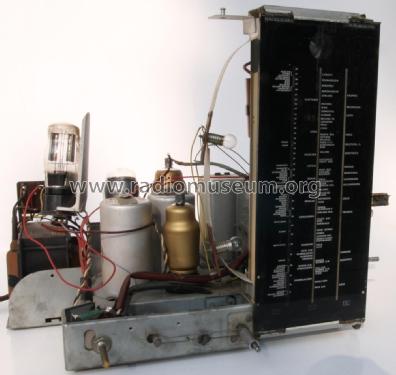
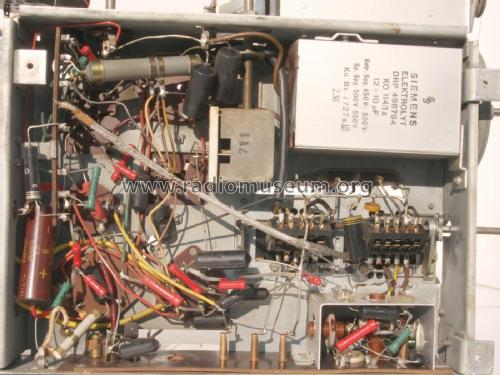
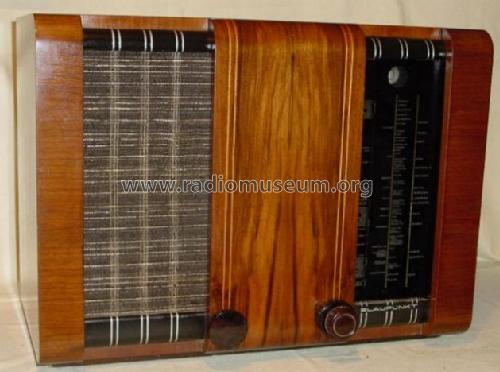
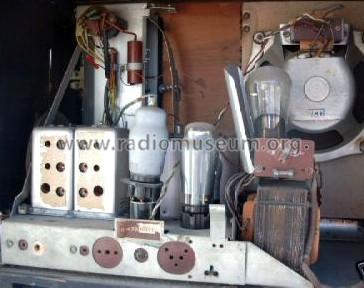
ebay
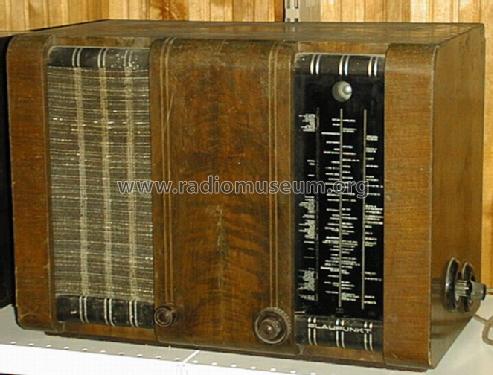
Kaunas, Lithuania
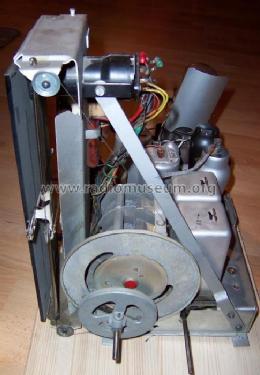
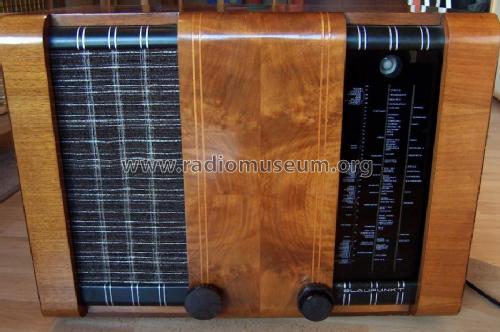
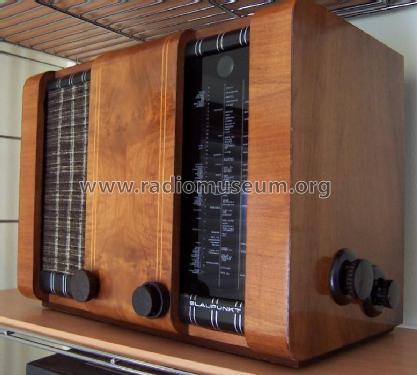
Knöpfe orginal

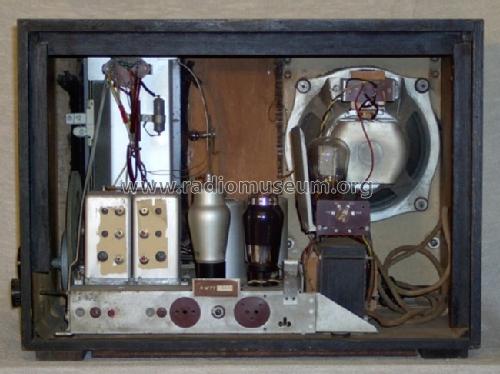
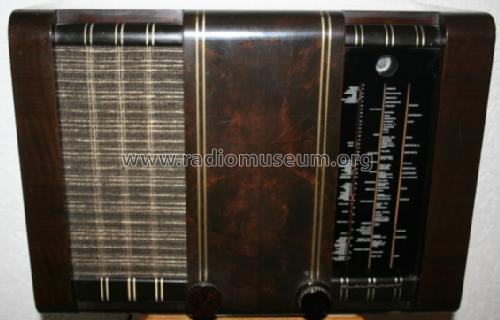

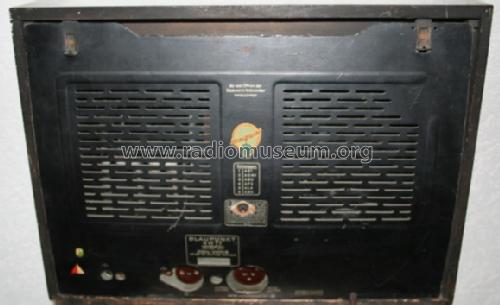
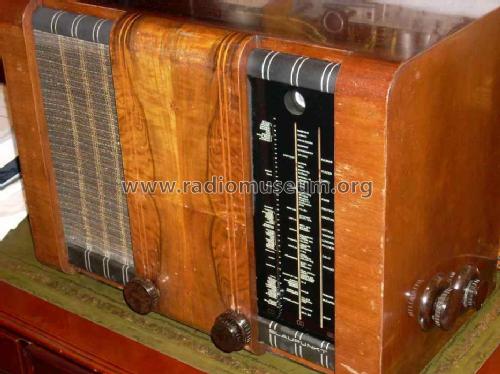


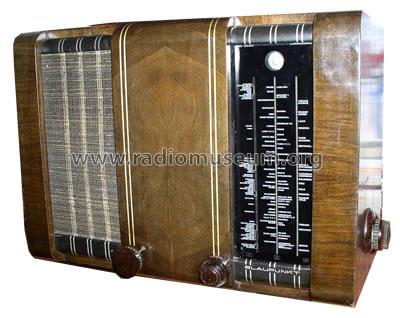
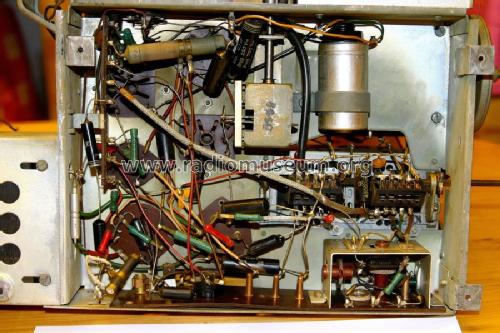
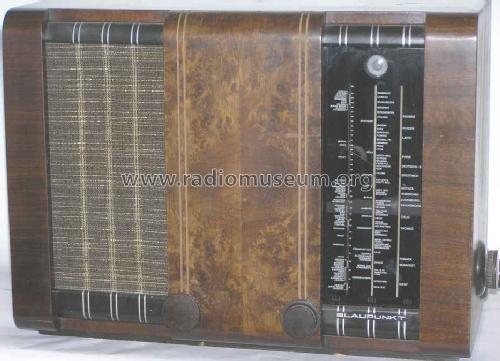
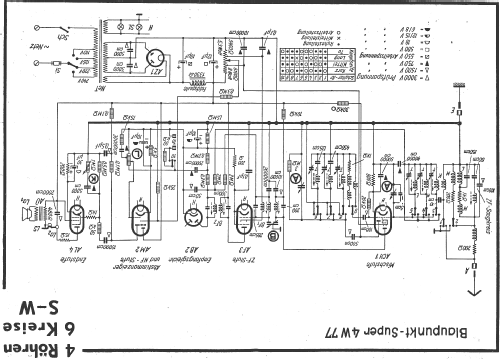
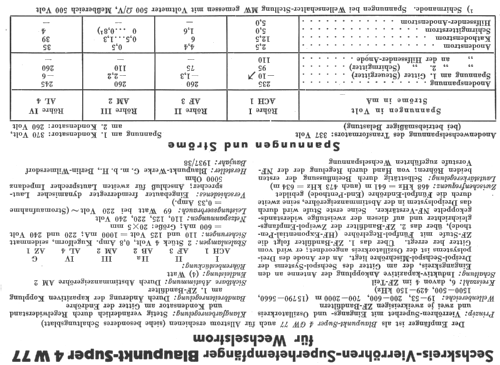
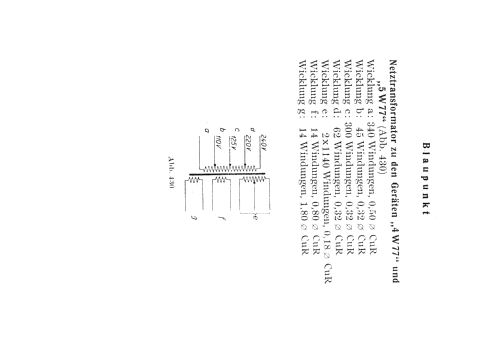
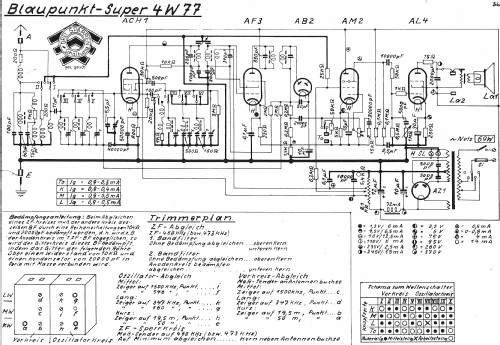
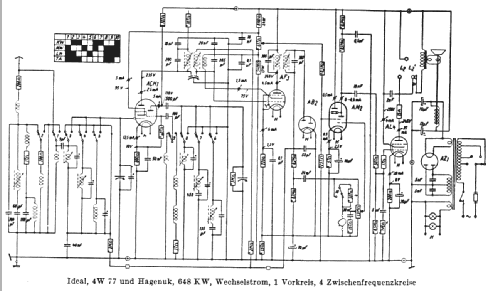
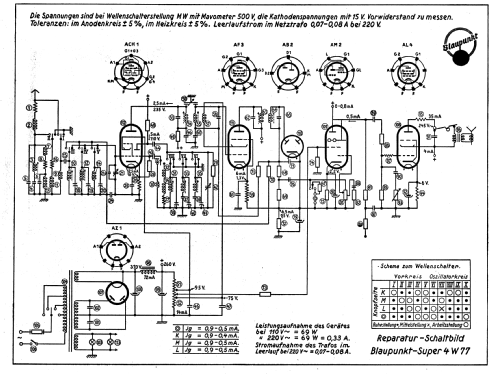
Click on the schematic thumbnail to request the schematic as a free document.
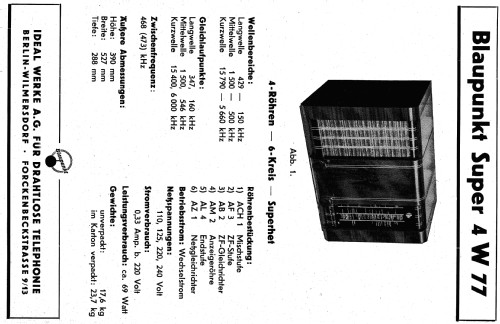
- Number of Tubes
- 6
- Main principle
- Superheterodyne (common); ZF/IF 468 kHz
- Tuned circuits
- 6 AM circuit(s)
- Wave bands
- Broadcast, Long Wave and Short Wave.
- Power type and voltage
- Alternating Current supply (AC) / 110; 125; 220; 240 Volt
- Loudspeaker
- Electro Magnetic Dynamic LS (moving-coil with field excitation coil)
- Material
- Wooden case
- from Radiomuseum.org
- Model: 4W77 - Blaupunkt Ideal, Berlin,
- Shape
- Tablemodel, low profile (big size).
- Dimensions (WHD)
- 528 x 390 x 290 mm / 20.8 x 15.4 x 11.4 inch
- Notes
- variable Bandbreite
- Net weight (2.2 lb = 1 kg)
- 17.6 kg / 38 lb 12.3 oz (38.767 lb)
- Price in first year of sale
- 287.00 RM
- Source of data
- Handbuch WDRG 1937 / Radiokatalog Band 1, Ernst Erb
- Circuit diagram reference
- Lange+Schenk+FS-Röhrenbestückung
- Picture reference
- Das Modell ist im «Radiokatalog» (Erb) abgebildet.
- Other Models
-
Here you find 3525 models, 3214 with images and 2320 with schematics for wireless sets etc. In French: TSF for Télégraphie sans fil.
All listed radios etc. from Blaupunkt (Ideal), Berlin, später Hildesheim
Collections
The model is part of the collections of the following members.
- Jürgen Bauch (D)
- Andreas Dick (D)
- Klaus Peter Dickel (D)
- Helmut Frings (D)
- Bruno Gandolfo-Canepa (RCH)
- Harald Giese (D)
- Rainer Goelsdorf (D)
- Karlheinz Gützlaff (D)
- Zenonas Langaitis (LT)
- Zlatan Mumlek (HR)
- Marjan Nedoh (SLO)
- Andreas Reuther (D)
- Reinhard Riek (D)
- Museum Roggenhofer (A)
- Friedhelm Schaik (D)
- Heinz Schmidt (D)
- Gil Silva (P)
- Martin Steyer (D)
- Urmas Tingas (EST)
- Werner Wussow (D)
Forum contributions about this model: Blaupunkt Ideal,: 4W77
Threads: 5 | Posts: 21
(Ergänzend zum Beitrag von Herrn Frings, 20.2.2009)
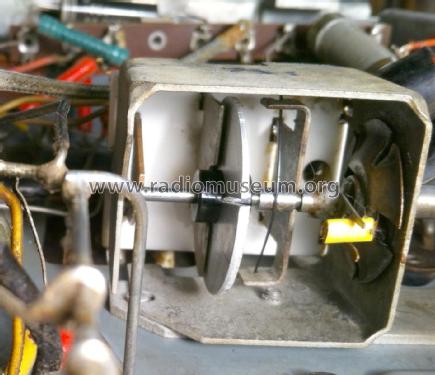
Das Problem : Der kleine Seilantrieb für die Klangeinstellung. Sieht einfach aus, und doch gibt es leichte Schwierigkeiten. Im Originalzustand ist die Mutter des Klangpotentiometers absichtlich nur lose angedreht, damit die Achse etwas Spiel hat und deshalb wurde sie mit einem Zinnklecks gesichert.
Beim festziehen allerdings ist plötzlich die Achse fest, ja richtig verklemmt ! (Die Seilspannung verursachte das Klemmen) Diese schlecht funktionierende Konstruktion wollte ich nicht so belassen.
Echte Abhilfe schaffte nur der Einbau eines vorderen Lagers (Das Messingteil im Foto, von einem alten Poti). Seilführung :
Poti und Antriebswelle in Mittelstellung, Poti-Achse vorne 2 Windungen,1 Umschlingung des Splints in der Mitte und weitere 2 Wdg.
Antriebsachse : 6 Wdg. und in der Mitte die Stahlklammer zur Fixierung.
Gerhard Meyer, Schwanstetten
Gerhard Meyer, 07.Jun.19
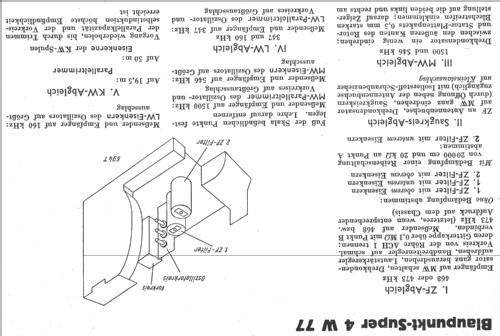
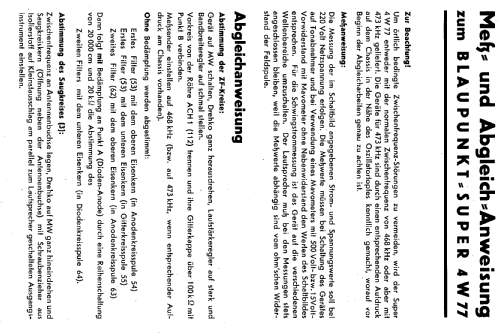
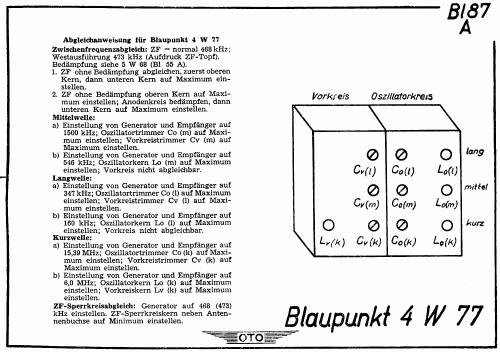
Zu Beginn der Meß-und Abgleich-Anweisung zum Blaupunkt-Super 4 W 77 ( Seite 9 des technischen Kundendienstheftes ) steht wörtlich : Zur Beachtung ! Um örtlich bedingte Zwischenfrequenz-Störungen zu vermeiden , wird der Super 4 W 77 entweder mit der normalen Zwischenfrequenz von 468 kHz oder aber mit 473 kHz geliefert. Die Geräte für 473 kHz sind durch einen entsprechenden Aufdruck auf dem Chassis in der Nähe des Oszillatortopfes kenntlich gemacht, worauf vor Beginn der Abgleicharbeiten genau zu achten ist . ...
Manfred Rathgeb, 31.Jan.13
Hallo zusammen,
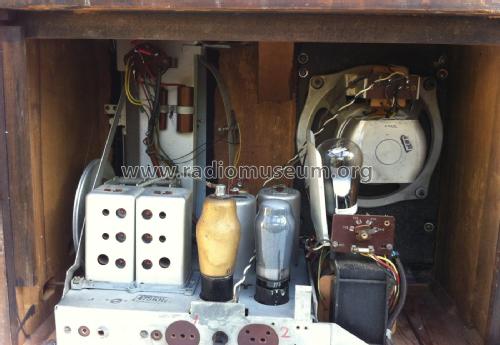
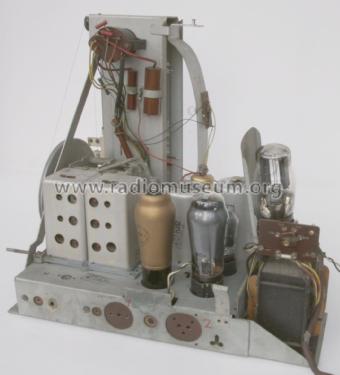
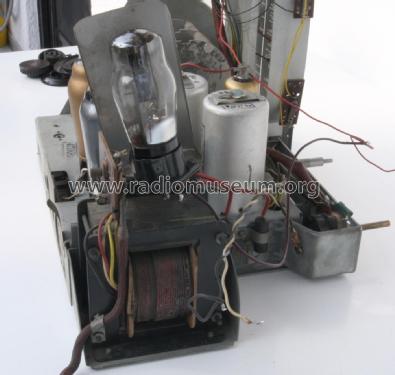
dieses schöne Gerät konnte ich gestern in Empfang nehmen. Fast alles ist noch original, der Elko wurde durch einen Kondensator amerikanischer Herkunft ( vermutlich mil ) möglicherweise in der Nachkriegszeit unter der Besatzung ersetzt.

sonst ist praktisch alles original.
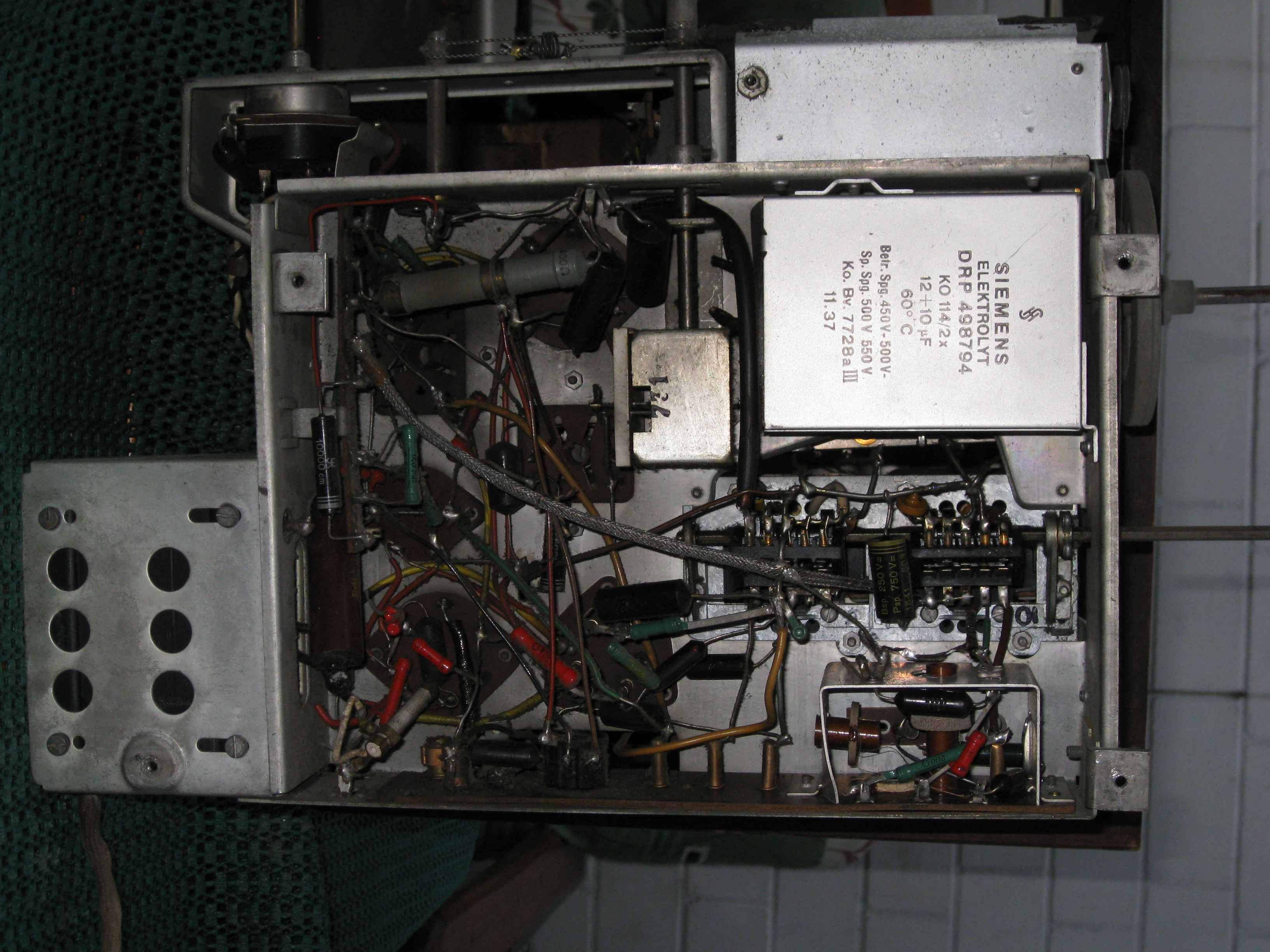
Ich frage mich, ob ich das Gerät wirklich reparieren soll, danach sind halt einige Teile neu, z.B. die Kondensatoren und das Gerät nicht mehr in authentischem Zustand.

Sogar die Original - Ersatzsicherungen sind noch dabei.
Meinungen dazu sind gefragt,
Georg Beckmann
Georg Beckmann, 08.Aug.09
Hallo Radiofreunde,
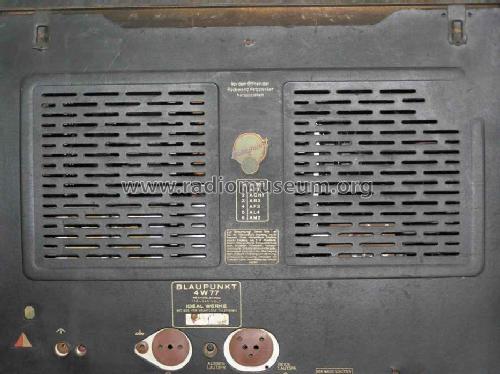
mein 4W77 hat an der Frontseite des Chassis einen Lötpunkt, der die Mutter der 6mm Achse fixieren soll und ein Langloch, wo die Achse durchgeht. Ist das nachträglich angefertigt worden? Wer kann bei einem unverbastelten Gerät nachschauen?

Mit freundlichen Grüßen
Helmut
Attachments
- 4W77 Front (99 KB)
Helmut Frings, 20.Feb.09
While reading about some early problems with the C/EM2 and the AM2 tuning indicators . . . . .the problems ALSO developed within the USA early tuning eye tubes 6E5 and 6G5 according to the Sylvania Technical publications from their tube engineers in the late 1930s.
Is it possible that an minor error may have been overlooked within this early Blaupunkt model and still appears in the schematic? The specific circuitry and components feeding into the Abstimmanzeiger and NF stop does not agree with some Funke tube test data.
Respectfully,
Robert
NOTE: I have reviewed most of the forum threads and have considered the postings by JR as they relate to a possible "fix"
Robert Sarbell † 22.3.22, 05.May.07