Meersburg W
SABA; Villingen
- Country
- Germany
- Manufacturer / Brand
- SABA; Villingen
- Year
- 1950/1951
- Category
- Broadcast Receiver - or past WW2 Tuner
- Radiomuseum.org ID
- 6590
-
- Brand: Schwer & Söhne, GmbH
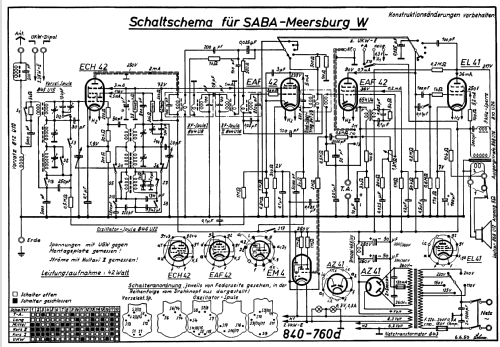
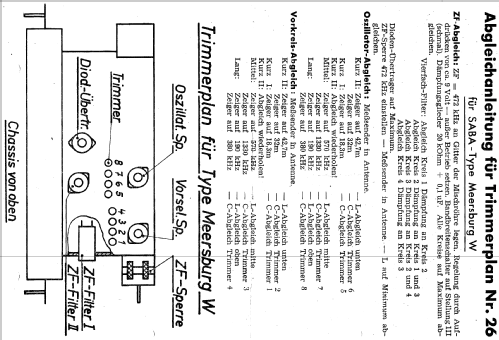
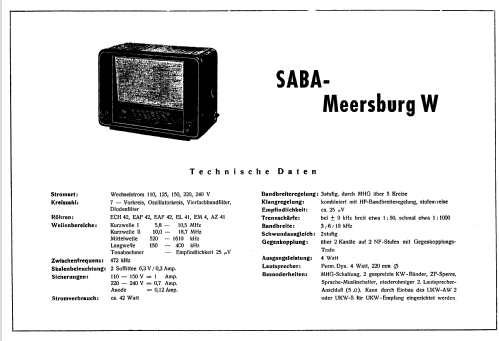
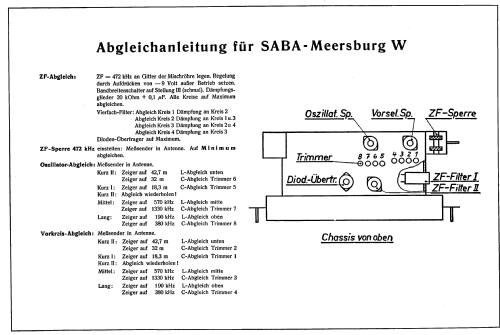



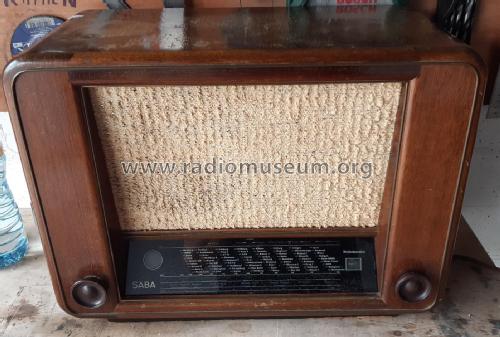
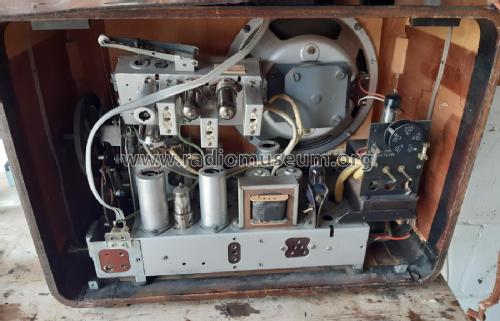


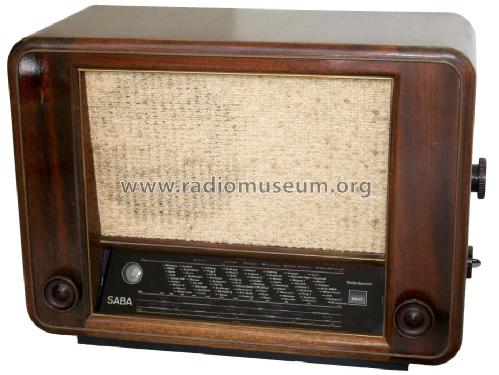
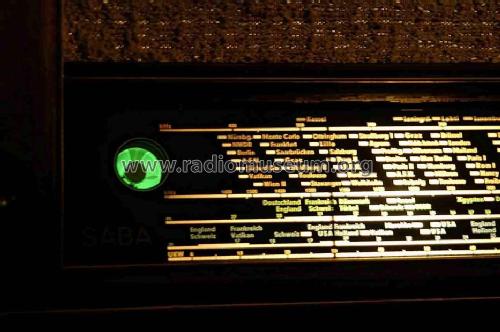
SABA Meersburg W, 1951, Nr. 227913, Front

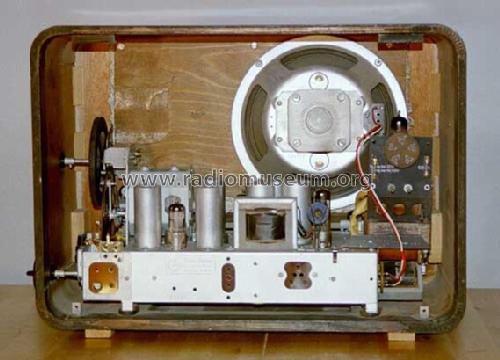

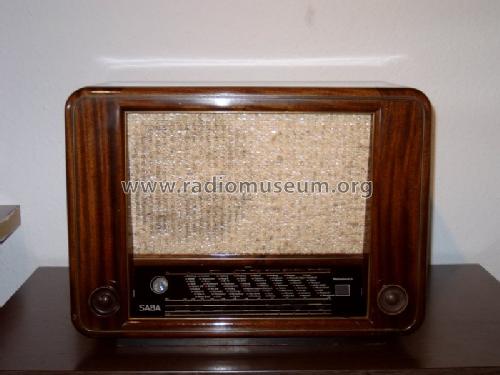
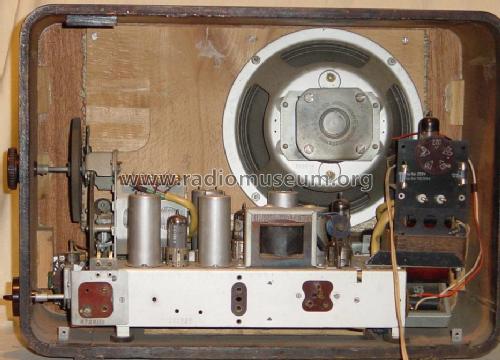
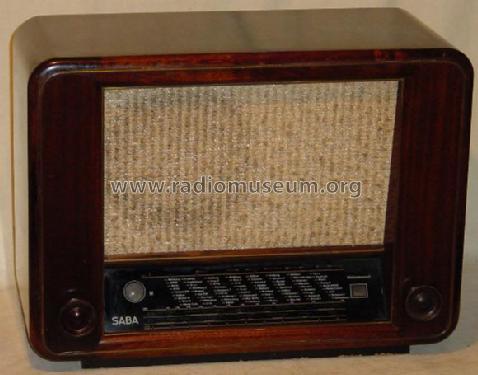
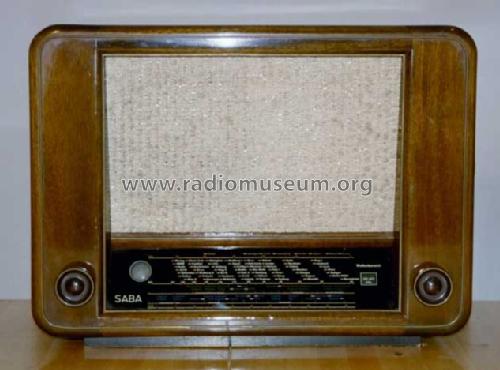
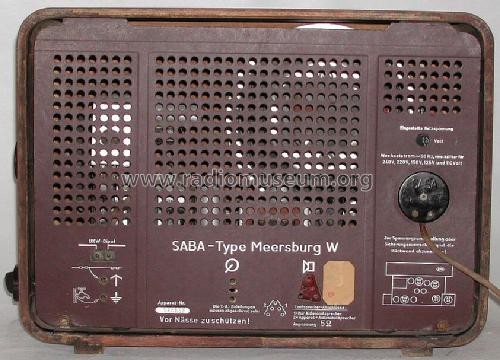
Eigenes Bild.
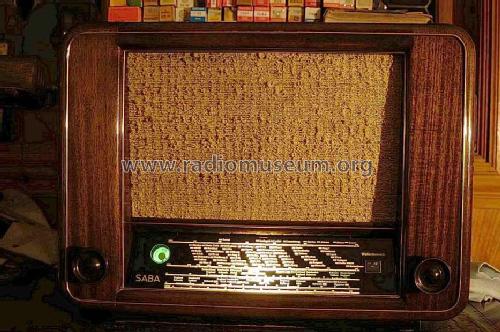
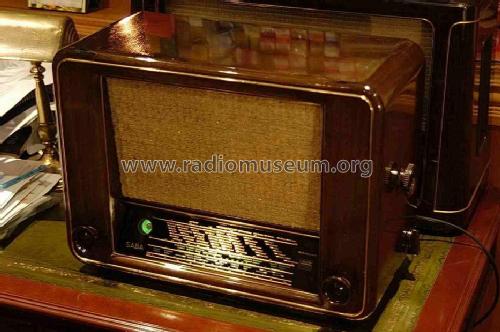
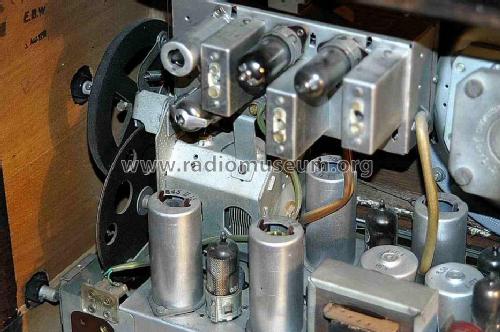
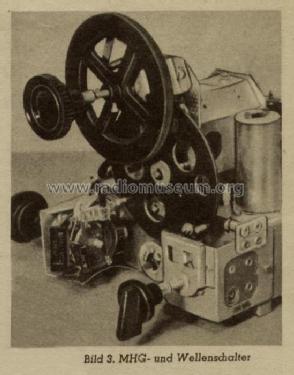
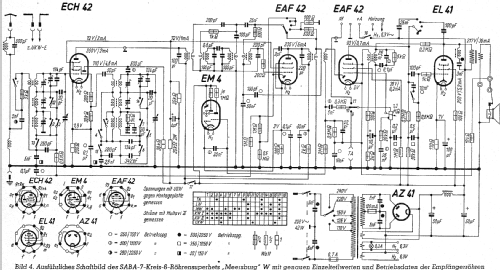
Quelle Funkschau 1950 Nr.20
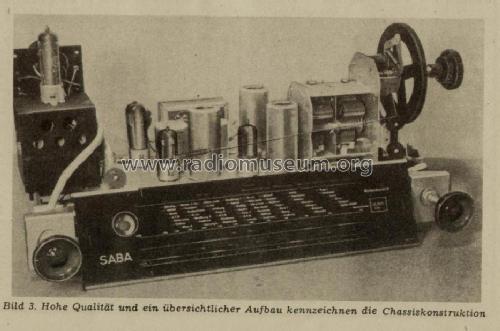
Quelle Funkschau 1950 Nr.20

SABA Meersburg W, 1951, Nr. 227913, Front

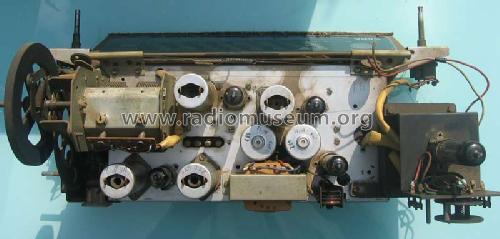
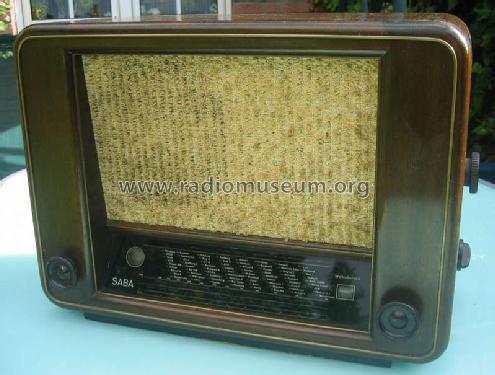
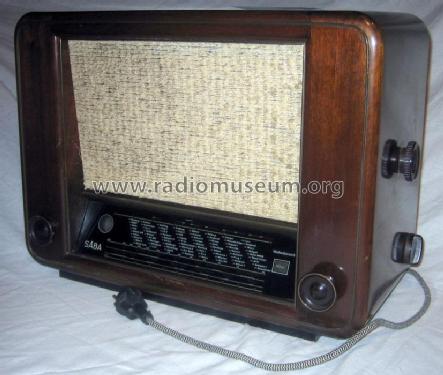
Nicht restauriert.

D_SABA_Meersburg_W_Kontrolzettel

Folleto publicitario

D_SABA_Meersburg W.jpg

Click on the schematic thumbnail to request the schematic as a free document.
- Number of Tubes
- 6
- Main principle
- Superheterodyne (common); ZF/IF 472 kHz
- Tuned circuits
- 7 AM circuit(s)
- Wave bands
- Ready for FM, has Broadcast, Long Wave, several Short Wave.
- Power type and voltage
- Alternating Current supply (AC) / 110; 125; 150; 220; 240 Volt
- Loudspeaker
- Permanent Magnet Dynamic (PDyn) Loudspeaker (moving coil) / Ø 22 cm = 8.7 inch
- Power out
- 4 W (unknown quality)
- Material
- Wooden case
- from Radiomuseum.org
- Model: Meersburg W - SABA; Villingen
- Shape
- Tablemodel, with any shape - general.
- Dimensions (WHD)
- 490 x 358 x 222 mm / 19.3 x 14.1 x 8.7 inch
- Notes
- Variable Bandbreitenregelung durch MHG Schaltung realisiert, diese ist mit dem 5-stufigem Klangschalter kombiniert, zwei KW-Bereiche. Aufrüstung mit UKW-Gerät UKW-S oder UKW-A möglich.
- Net weight (2.2 lb = 1 kg)
- 11.6 kg / 25 lb 8.8 oz (25.551 lb)
- Price in first year of sale
- 312.00 DM
- Source of data
- Kat.d. Rundf.Gr.Handel 1950/51 / Radiokatalog Band 1, Ernst Erb
- Circuit diagram reference
- Lange-Nowisch
- Mentioned in
- Funk-Technik (FT) (5016)
- Literature/Schematics (1)
- Funkschau (5015)
- Picture reference
- Das Modell ist im «Radiokatalog» (Erb) abgebildet.
- Other Models
-
Here you find 1643 models, 1492 with images and 1176 with schematics for wireless sets etc. In French: TSF for Télégraphie sans fil.
All listed radios etc. from SABA; Villingen
Collections
The model Meersburg is part of the collections of the following members.
Forum contributions about this model: SABA; Villingen: Meersburg W
Threads: 2 | Posts: 6
Beim Meersburg W von 1950/1951 gab es offensichtlich vier verschiedene Modelle:
1. Meersburg W: Dies ist die Standardausführung, nur mit AM (2xKW, MW, LW) ohne UKW
2. Meersburg W-US: Mit ab Werk eingebautem UKW-Superhet-Vorsatz UKW-S. Nicht im Handbuch des Rundfunkhandels aufgeführt!
3. Meersburg W-UA: Mit ab Werk eingebautem UKW-Pendler UKW-A (UA), Röhre ECH43. Diese Ausführung ist im Handbuch des Rundfunkhandels 1950/51 neben dem einfachen Meersburg angegeben. Die zum jetzigen Zeitpunkt eingestellten Bilder beim Modell gehören definitiv zum UA2!
4. Meersburg W-UA2: Mit ab Werk eingebautem UKW-Pendler UKW-A2 (UA2), Röhren EF42, EF41. Dies ist offenkundig das Nachfolgemodell des UA mit verbessertem Pendelvorsatz. Gerät habe ich zur Neuanlage vorgeschlagen.
Die Typen 2, 3 und 4 hatten die Zusatzbezeichnungen nicht direkt auf der Rückwand eingestanzt, es wurden braune Papierzettel hinter die Bezeichnung "Meersburg" geklebt, eine Praxis, die SABA offensichtlich häufiger bei Typenänderungen verwendete, z.B. die ersten Geräte der Serie W5, die zu W5-3D geändert wurden. Auch beim Freiburg 3DS gibt es Modelle, wo das "3DS" erst nachträglich angebracht wurde. Das war wahrscheinlich die große "Umbauaktion" zur Funkausstellung 1954, als SABA nachträglich die Seitenlautsprecher einsetzte.
Bitte durchforsten Sie Ihre Bestände, denn vom Typ 3 (Meersburg W-UA) fehlen bisher Bilder!
Martin Steyer, 18.Nov.09
My apologies for the incorrect model designation in the Title
The FM unit is installed in the Meersburg W according to the rear panel
Reviewing the schematic for the model 840-780a (dated 6.6.50) and presumably for radios produced in 1950/51, I have not completely understood the function of the right front knob and the lower right rear knob on the side of the radio.
I believe the use and function of the lower right rear knob is the same as that of the Saba S455WK that I have.
I believed the right front knob, however, is used to select the Mode of Operation as follows:
with 5 possible selections, I estimated the Modes to be---
1. TA only
2. All except UKW operation
3. UKW only
4. UKW muting
5. Sensitivity selection (weak or strong) and EM4 circuitry correlation
I realize there were many issues being resolved, after the Copenhagen convention, and improvements to reduce interferences and allow for interstation suppression of "excess noise". The use of the EQ80 FM discriminator (the phase detectors) appears to be somewhat brief in FM circuit developments, and also possibly added to the earliest models to reduce the number of tubes in the radio.
I would be most appreciative to determine the proper use and function of these knobs.
Respectfully,
Robert
Dieser Beitrag wurde am 10.Aug.05 14:32 von Robert Sarbell editiert.
This Post was copied here by Henning Oelkers
Henning Oelkers, 10.Aug.05