SSB Transceiver FT-101E
Yaesu-Musen Co. Ltd.; Tokyo
- Country
- Japan
- Manufacturer / Brand
- Yaesu-Musen Co. Ltd.; Tokyo
- Year
- 1975–1978
- Category
- Amateur TRX: Transmitter/Receiver (and Transceiver)
- Radiomuseum.org ID
- 69098



Click on the schematic thumbnail to request the schematic as a free document.
- Number of Tubes
- 3
- Number of Transistors
- 40
- Semiconductors
- Main principle
- Transceiver
- Wave bands
- Wave Bands given in the notes.
- Power type and voltage
- Line / Batteries (any type) / 100-234 / 12 Volt
- Loudspeaker
- Permanent Magnet Dynamic (PDyn) Loudspeaker (moving coil)
- Power out
- 3 W (max.)
- Material
- Metal case
- from Radiomuseum.org
- Model: SSB Transceiver FT-101E - Yaesu-Musen Co. Ltd.; Tokyo
- Shape
- Tablemodel, with any shape - general.
- Dimensions (WHD)
- 340 x 153 x 285 mm / 13.4 x 6 x 11.2 inch
- Notes
-
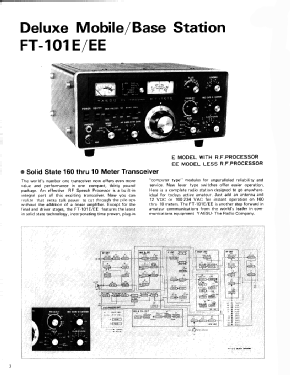
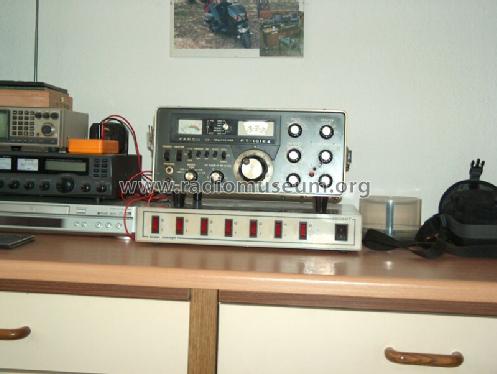
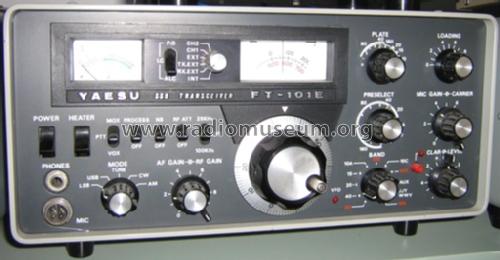
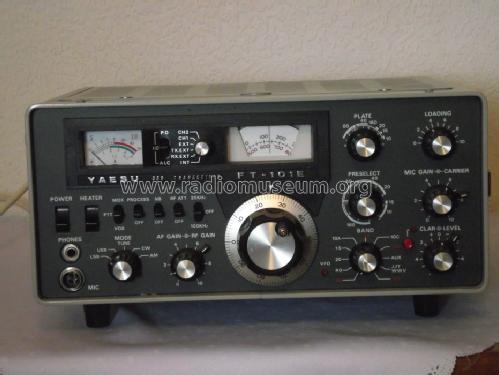
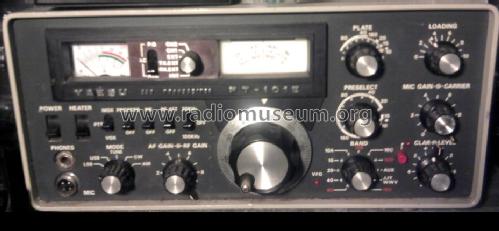
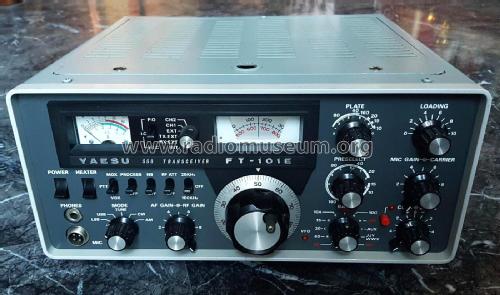
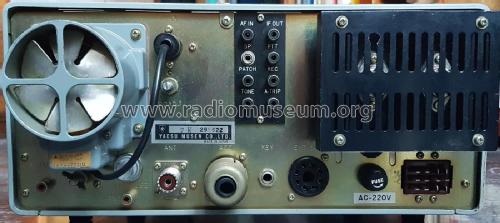
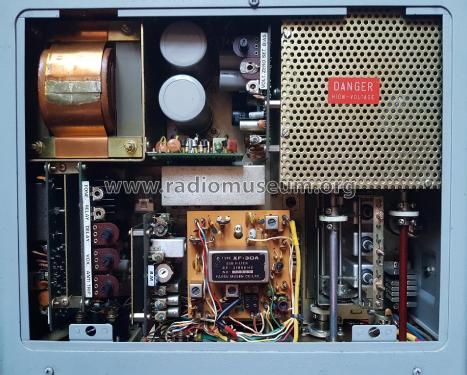
Yaesu HF-Transceiver FT-101E.
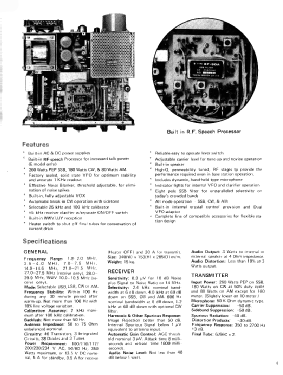
Frequency range: 160 to 10 m HAM-Bands plus CB and reception of time-stations in the 10-MHz-range. Modes; SSB, CW, AM; Speech-processor built in; Pout: 90 W.
Also available as FT-101EE without an R.F. Processor.
In Europe also sold as Sommerkamp FT-277E.
- Net weight (2.2 lb = 1 kg)
- 15 kg / 33 lb 0.6 oz (33.04 lb)
- Price in first year of sale
- 749.00 $
- External source of data
- Eilert Menke
- Author
- Model page created by a member from D. See "Data change" for further contributors.
- Other Models
-
Here you find 301 models, 284 with images and 137 with schematics for wireless sets etc. In French: TSF for Télégraphie sans fil.
All listed radios etc. from Yaesu-Musen Co. Ltd.; Tokyo
Collections
The model SSB Transceiver is part of the collections of the following members.
Forum contributions about this model: Yaesu-Musen Co. Ltd.: SSB Transceiver FT-101E
Threads: 2 | Posts: 3
From www.mods.dk, author not known:
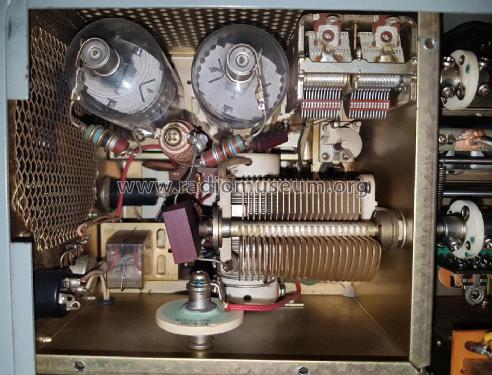
There will come a time when the finals in your FT101E will need replacing. These transceivers were originally equipped with 6JS6C tubes manufactured by NEC.
This tube's properties are slightly different from the 6JS6C tubes available today from American tube manufacturers. By the way, don't bother looking for tubes made by NEC. They got out of the business several years ago.
In order to use the "American" variety 6JS6's, a simple modification to the neutralization circuit must be made to the final section of the transceiver.
The modification consists of replacing the fixed value 100 pf 1000 VDC mica capacitor with a 10 pf 1000 VDC mica capacitor. This capacitor, C125, is in series with the 10 pf variable neutralizing capacitor off of the plate circuit.
If this modification has not already been completed on your rig, be sure to use a mica or silver mica of at least 1000 VDC. Do not substitute a different type, because the heat in the final compartment will change the value, and your tubes will fail prematurely. Also, be very careful to keep all leads short and in exactly the same orientation as the original capacitor.
Before reneutralizing, open the variable neutralizing capacitor all the way to minimum engagement and follow the neutralizing instructions in the manual. While dipping the plate, remember to adjust the neutralizing capacitor for equal value meter reading peaks (IC position) on both sides of the dip when tuning the "Plate" control.
Eilert Menke, 23.Jun.04