ICF-SW100
Sony Corporation; Tokyo
- Country
- Japan
- Manufacturer / Brand
- Sony Corporation; Tokyo
- Year
- 1995
- Category
- Broadcast Receiver - or past WW2 Tuner
- Radiomuseum.org ID
- 79503
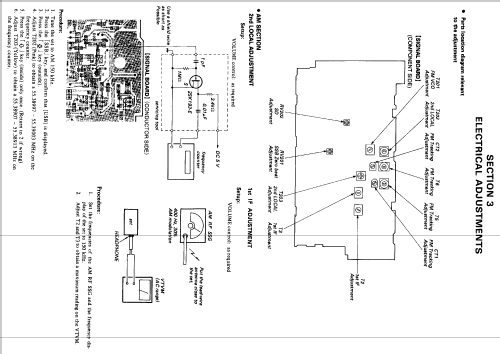

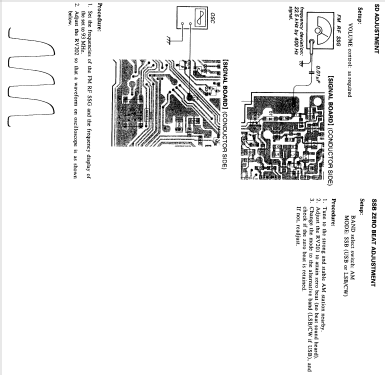


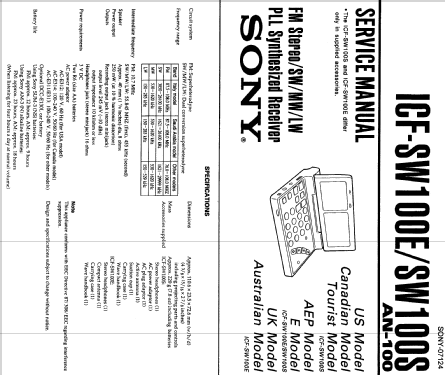


Main board of my Sony SW-100

Auf Wunsch des Hochladers gesperrt

New flat cables for my Sony SW-100

New flat cables for my Sony SW-100

Ebay Seller babyjdrums Item 290699004901

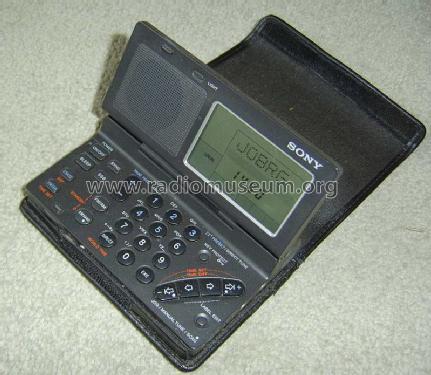
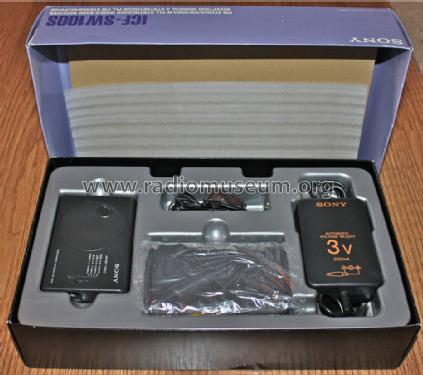
Ebay Seller babyjdrums Item 290699004901
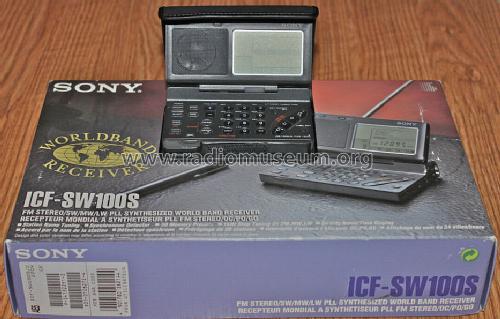
Ebay Seller babyjdrums Item 290699004901
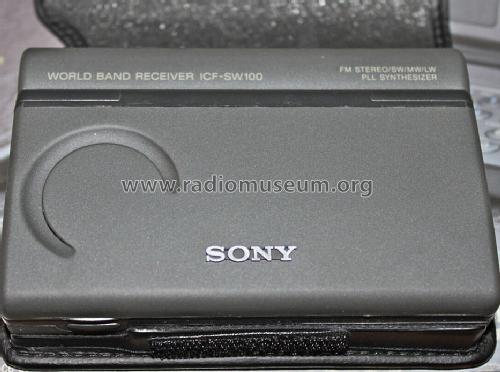
Ebay Seller babyjdrums Item 290699004901
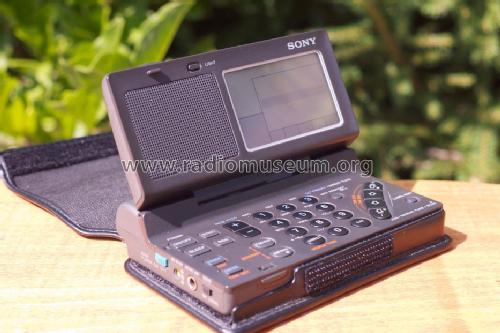
Gerät im ursprünglichen Zustand, OVP, spielt
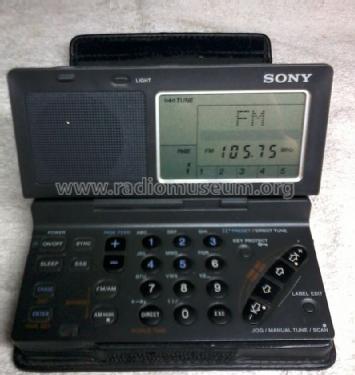
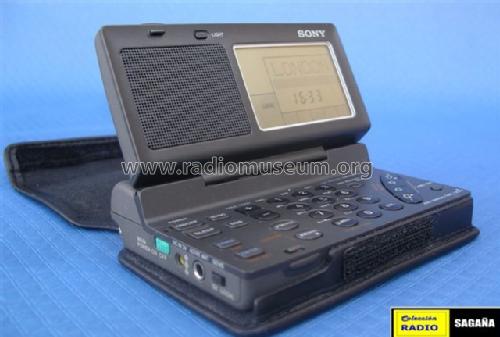
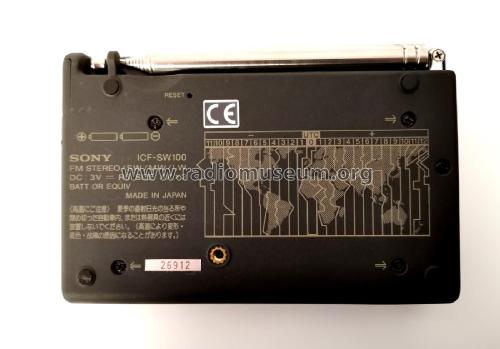
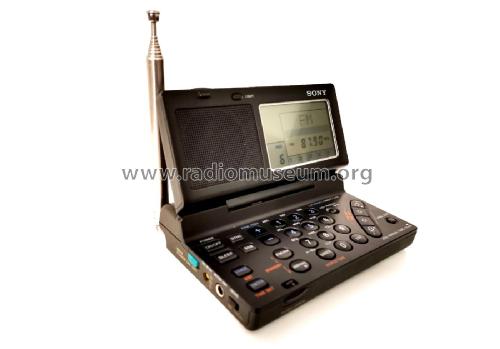
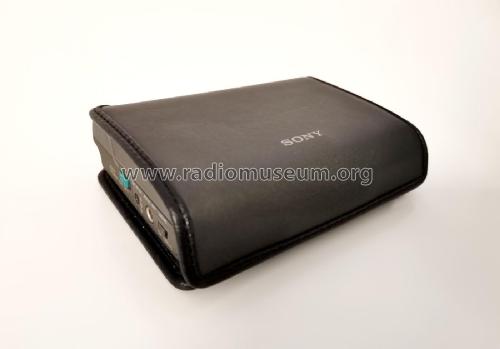
Sony ICF-SW100 - Front


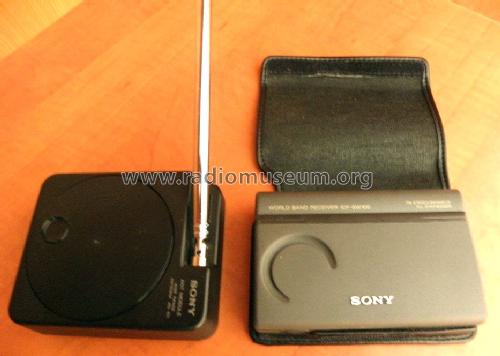

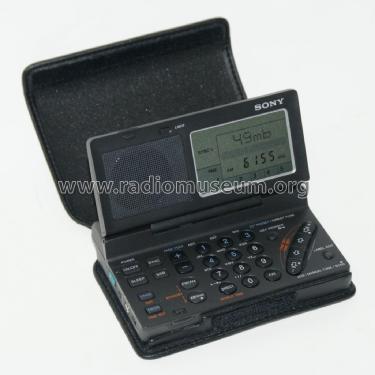

Frontansicht

Deckel geschlossen
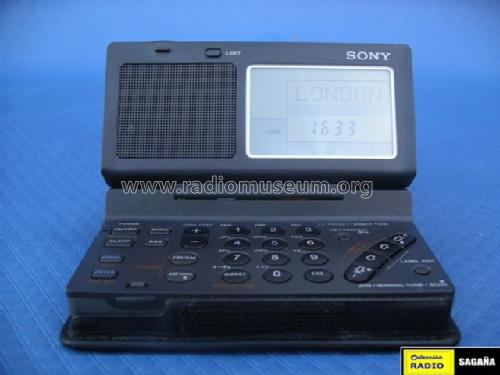



Click on the schematic thumbnail to request the schematic as a free document.
- Number of Transistors
- Semiconductors present.
- Semiconductors
- Main principle
- Superhet, double/triple conversion
- Wave bands
- Broadcast, Long Wave, more than 2 x SW plus FM or UHF.
- Power type and voltage
- Batteries / addl. power jack / AA: 2 ×1,5 / 3 Volt
- Loudspeaker
- Permanent Magnet Dynamic (PDyn) Loudspeaker (moving coil) / Ø 3.5 cm = 1.4 inch
- Material
- Plastics (no bakelite or catalin)
- from Radiomuseum.org
- Model: ICF-SW100 - Sony Corporation; Tokyo
- Shape
- Very small Portable or Pocket-Set (Handheld) < 8 inch.
- Dimensions (WHD)
- 110 x 73 x 23 mm / 4.3 x 2.9 x 0.9 inch
- Notes
- covers 150 - 30000 kHz; AM, AM-Sync, SSB (BFO);
direct keypad frequency entry, 50 alphanumeric memories
sold as ICF-SW100E (radio only) and ICF-SW100S (set with active antenna AN-100). FM Stereo 76-108 MHz.
- Net weight (2.2 lb = 1 kg)
- 0.220 kg / 0 lb 7.8 oz (0.485 lb)
- Price in first year of sale
- 549.00 DM
- Source of data
- -- Original prospect or advert
- Mentioned in
- Alles über die Sony-Weltempfänger (Siebel Verlag)
- Author
- Model page created by Martin Bösch. See "Data change" for further contributors.
- Other Models
-
Here you find 4068 models, 3925 with images and 975 with schematics for wireless sets etc. In French: TSF for Télégraphie sans fil.
All listed radios etc. from Sony Corporation; Tokyo
Collections
The model is part of the collections of the following members.
Forum contributions about this model: Sony Corporation;: ICF-SW100
Threads: 1 | Posts: 1
Early production samples of this radio tend to fail, a copper ribbon cable connecting the lower and the upper part of the radio will be bent repetitively over a very sharp edge of the lid. After a while, the copper ribbon cable connections are likely to break, some of the keys will become inoperational, sometimes this will happen even to the on/off - button. Rarely the signal ribbon cable will brake.
You might recognize the early ICF-SW100 sets by the copper connector, that can bee seen in the gap, in later models produced after autumn 1997, You see a black plastic cover over the connector and the lid mould has been changed.
You might try to repair Your set using a file to dull the sharp plastic edges where the connector will have to get past. There has been a Sony repair kit for these early models with a different lid mould.
Find more informations on this site of Michael Rathbun.
Hope this helps
Martin Boesch
Martin Bösch, 25.Aug.08