Super inductance 836A
Philips; Eindhoven (tubes international!); Miniwatt
- Country
- Netherlands
- Manufacturer / Brand
- Philips; Eindhoven (tubes international!); Miniwatt
- Year
- 1934/1935
- Category
- Broadcast Receiver - or past WW2 Tuner
- Radiomuseum.org ID
- 29567


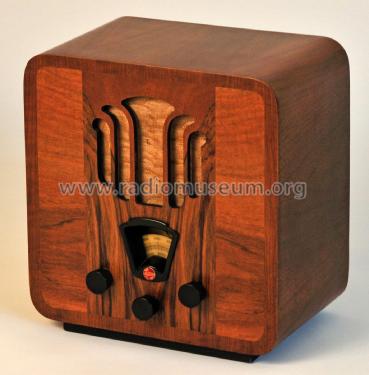
Collection Henk Beens (NL)
Collection Henk Beens (NL)
Collection Henk Beens (NL)
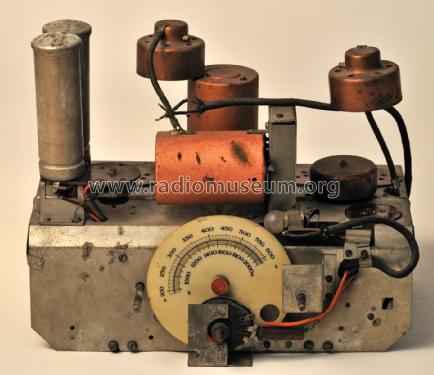
Collection Henk Beens (NL)
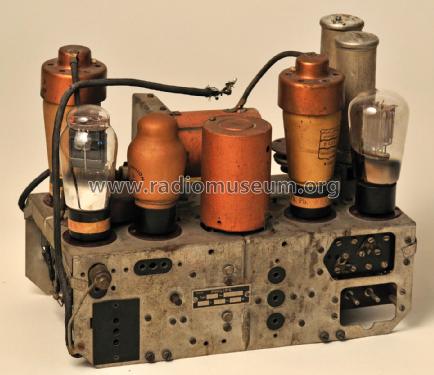
Collection Henk Beens (NL)

Collection Henk Beens (NL)

Collection Henk Beens (NL)

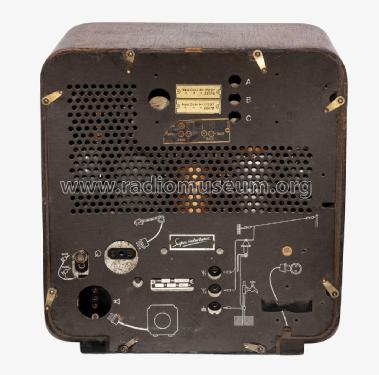
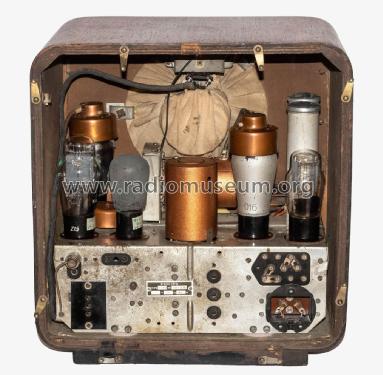


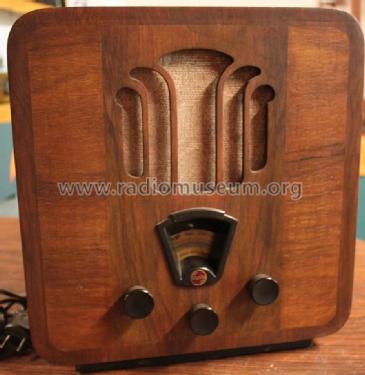

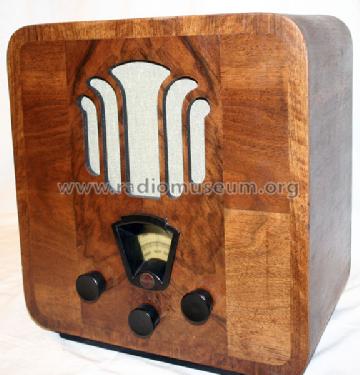
RKK Radio Museum --- www.rkk-museum.ru

RKK Radio Museum ---
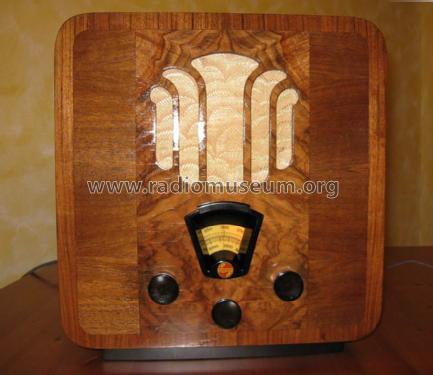
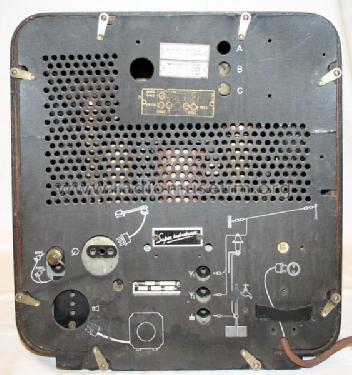
RKK Radio Museum ---
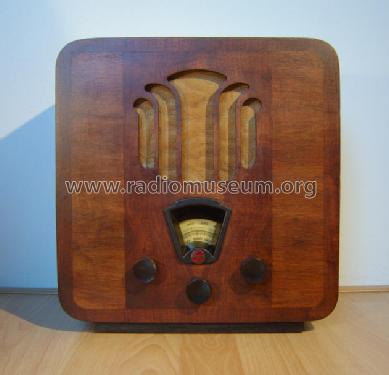
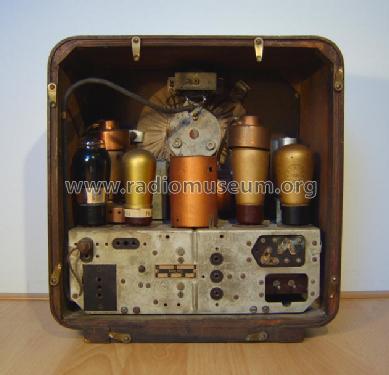


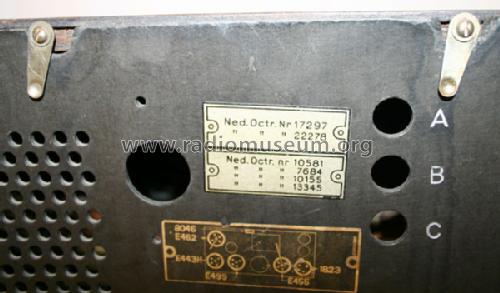
RKK Radio Museum --- www.rkk-museum.ru
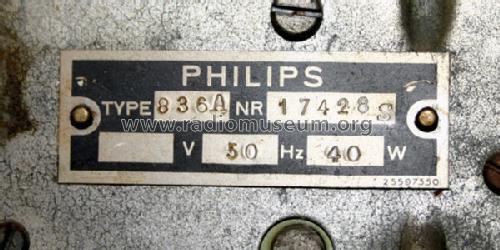
RKK Radio Museum --- www.rkk-museum.ru

RKK Radio Museum --- www.rkk-museum.ru

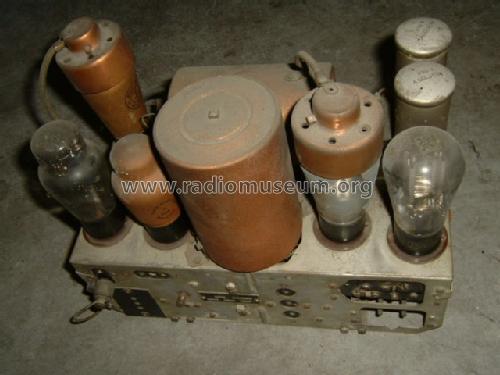
Under side

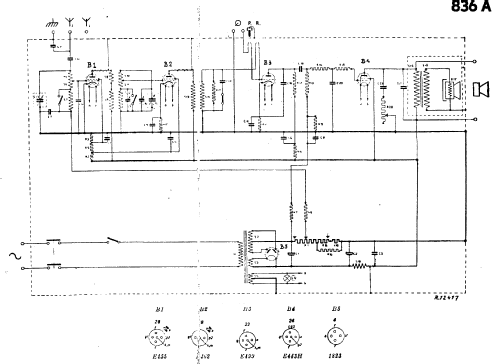
Click on the schematic thumbnail to request the schematic as a free document.
- Number of Tubes
- 5
- Main principle
- TRF without regeneration; 2 AF stage(s); Anode bend detection
- Tuned circuits
- 2 AM circuit(s)
- Wave bands
- Broadcast (MW) and Long Wave.
- Power type and voltage
- Alternating Current supply (AC) / 103; 111; 118; 127; 135; 143; 155; 196; 210; 225; 240; 253 Volt
- Loudspeaker
- Permanent Magnet Dynamic (PDyn) Loudspeaker (moving coil) / Ø 17 cm = 6.7 inch
- Power out
- 3.1 W (unknown quality)
- Material
- Wooden case
- from Radiomuseum.org
- Model: Super inductance 836A - Philips; Eindhoven tubes
- Shape
- Tablemodel, high profile (upright - NOT Cathedral nor decorative).
- Dimensions (WHD)
- 343 x 365 x 215 mm / 13.5 x 14.4 x 8.5 inch
- Price in first year of sale
- 98.00 hfl
- Source of data
- Overzicht v.de toe te p PHILIPS
- Mentioned in
- Technisch- Commercieel - Radio Vademecum Staleman
- Literature/Schematics (1)
- -- Original-techn. papers.
- Author
- Model page created by Iven Müller. See "Data change" for further contributors.
- Other Models
-
Here you find 5233 models, 4365 with images and 3446 with schematics for wireless sets etc. In French: TSF for Télégraphie sans fil.
All listed radios etc. from Philips; Eindhoven (tubes international!); Miniwatt
Collections
The model Super inductance is part of the collections of the following members.
Museums
The model Super inductance can be seen in the following museums.
Forum contributions about this model: Philips; Eindhoven: Super inductance 836A
Threads: 1 | Posts: 6
Hello dear radiofriends,
A Philips 836A that I am restoring gives me following worries:
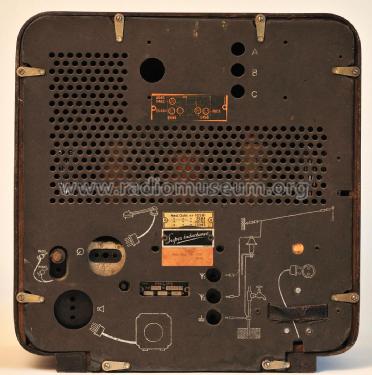
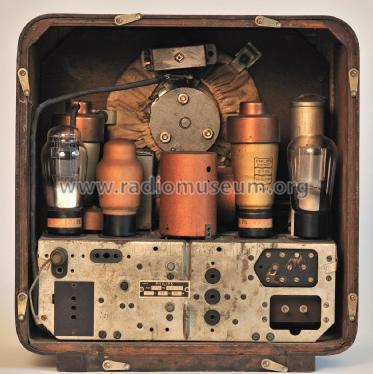
according to the label on the rear panel and to the circuit diagram, it should have Philips tubes E455, E462, E499, E433H and 1823 , but the set has Telefunken RENS1274, Philips E462, Thermion 5-438, Telefunken RES964 and Telefunken RGN1064 instead.
The rear panel carries also a label with this text " LICENCE S.E.M.-S.B.R. BREVET PHILIPS"
Now I foud out that there was also a German version, originally equipped with Telefunken tubes. This model is also present in RMORG.
The serial number of my set is 1862C.
Has this set been manufactured in Germany?
Is the Thermion tube 5-438 equivalent to the Philips E499?
What was the reason to make Dutch Philips radios with Telefunken tubes?
What does the label "Licence etc" mean? Was this typical for Belgium?
Warm greetings
Georges Van Campenhout † 28.4.22, 05.Nov.06