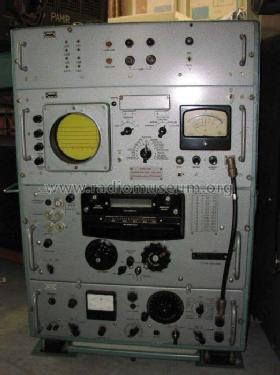
"Kit M2" R-250M2 {Р-250М2}
Industrial Union Proton; Charkov (Ukraine), see Charkov Radio Works N°158
- Country
- Soviet Union
- Manufacturer / Brand
- Industrial Union Proton; Charkov (Ukraine), see Charkov Radio Works N°158
- Year
- 1966–1981
- Category
- Military Receiver
- Radiomuseum.org ID
- 82982
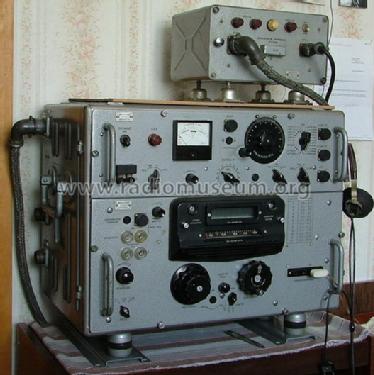
Kaunas Lithuania

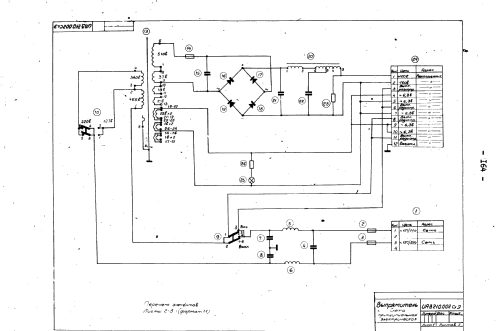
"R-250" supply block

Kaunas Lithuania

R-250M2, block 1, inside
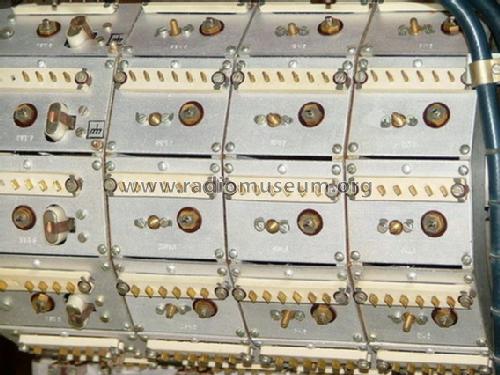
R250M2, band switch drum, contakts

R-250M2, block 1, inside

R250M2, block 2, inside
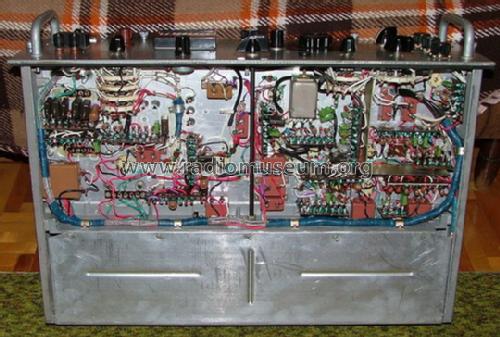
R-250M2, block 2, inside

Kaunas Lithuania

R-250M2, vernier.

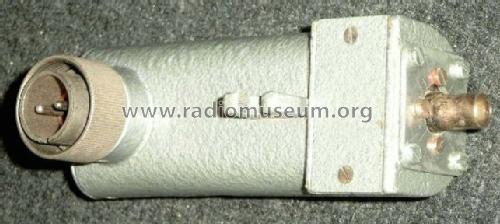
R-250M2, shock - absorbers on case down.
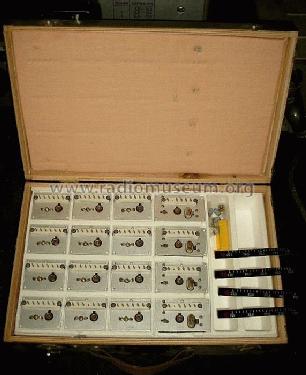


projection scale above
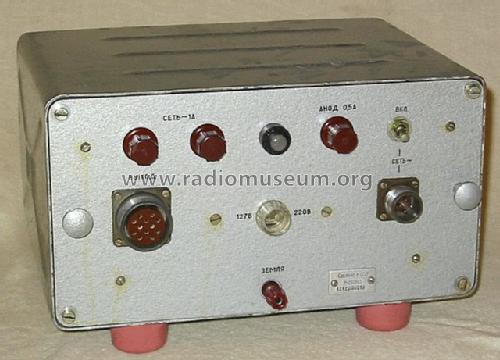
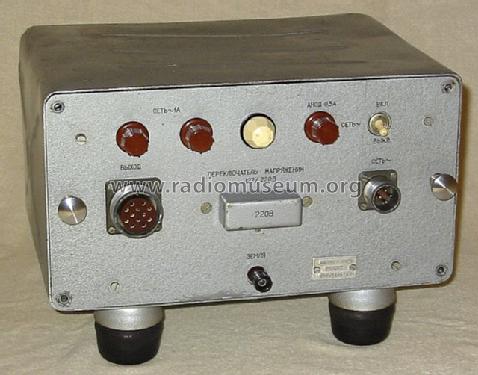

inside view of R-250M2 power supply

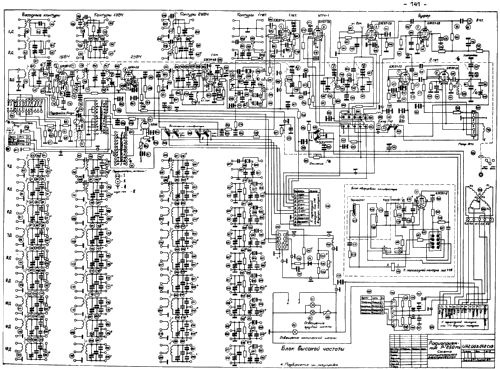
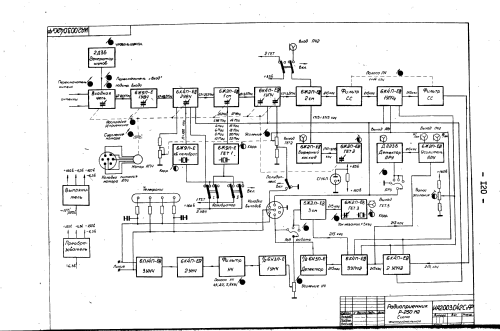
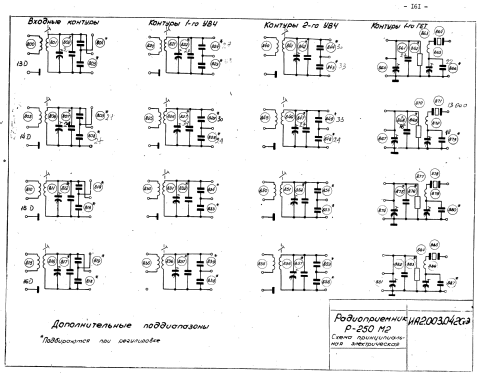
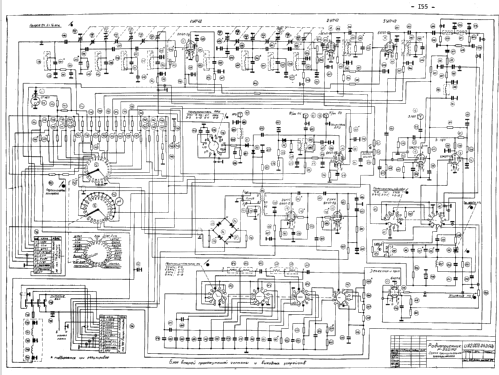
Click on the schematic thumbnail to request the schematic as a free document.
- Number of Tubes
- 20
- Valves / Tubes
- 6К4П 6К4П 6К4П 6К4П 6К4П 6К4П 6К4П 6Ж9П 6Ж9П 6Ж9П 6Ж2П 6Ж2П 6Ж2П 6Ж2П 6Ж2П 6Ж2П 6Ж2П 6Н3П 6П14П 2Д3Б
- Main principle
- Superhet, double/triple conversion
- Wave bands
- Wave Bands given in the notes.
- Power type and voltage
- Powered by external power supply or a main unit. / 127/220/12 Volt
- Loudspeaker
- - This model requires external speaker(s).
- Material
- Metal case
- from Radiomuseum.org
- Model: "Kit M2" R-250M2 {Р-250М2} - Industrial Union Proton;
- Shape
- Boatanchor (heavy military or commercial set >20 kg).
- Dimensions (WHD)
- 660 x 472 x 445 mm / 26 x 18.6 x 17.5 inch
- Notes
-
Successor of R-250M. 1.5-25.5 MHz in 12 ranges (turret tuner), with optional extension kit four additional ranges up to 33.5 MHz, AM/SSB/CW, optical projection tuning scale, motor driven AFC. 1st IF 1500-3500 kHz, 2nd IF 215 kHz. Variable IF bandwith from 1 to 14 kHz, LF filters for 0.3/2.5/5/8 kHz. Needs external power supply (WHD 305 x 220 x 250 mm, 12 Kg; DC 160 Volts, AC 6.3 Volts), or special 12 Volts DC/DC power transverter for mobile use.
R-250, R-250M and R-250M2 where the most prominent and remarkable Russian short wave receivers. The receiver line produced and modernised from 1948 until 1981. The designer was Anton Antonovich Saveliev, Yuri Alexandrov (U1SX) and others. The project was started in 1940 and finalished in 1946 - 1949. First named AS-1 and AS-2 (designers initials) The set took the Stalin Premium prize in the early 50's. While working on the design numerous other developments were taken into account, but no examples were actually obtained, so it is basically an original Russian design. AS-2 is an early version of R-250 and identical to it. Only the labels are different. Very few AS sets were produced, so it is a rare thing among the R-250 series radios. The design is very rugged. The set comes in a cabinet with two compartments and is made from Aluminium (Silumin) castings which are used on chassis etc.
All R-250 series produced from 1949 till 1981 largely in Charkov Radio Works (later IU "Proton") and some in other factories. Name "Kit" - translated "Whale". The receiver was mainly used in soviet and her allied armed forces. Later often found in HAM radio clubstations.
- Net weight (2.2 lb = 1 kg)
- 95 kg / 209 lb 4 oz (209.251 lb)
- Source of data
- -- Original-techn. papers.
- Mentioned in
- V.I. Shapkin, The Red Ears, Moscow 2003
- Literature/Schematics (1)
- LTC William L. Howard, Largo
- Literature/Schematics (2)
- Shortwave Receivers - Past & Present (4th ed.) (p. 744)
- Author
- Model page created by Zenonas Langaitis. See "Data change" for further contributors.
- Other Models
-
Here you find 5 models, 3 with images and 3 with schematics for wireless sets etc. In French: TSF for Télégraphie sans fil.
All listed radios etc. from Industrial Union Proton; Charkov (Ukraine), see Charkov Radio Works N°158
Collections
The model "Kit M2" is part of the collections of the following members.