100 early
RCA (RCA Victor Co. Inc.); New York (NY)
- Country
- United States of America (USA)
- Manufacturer / Brand
- RCA (RCA Victor Co. Inc.); New York (NY)
- Year
- 1933
- Category
- Broadcast Receiver - or past WW2 Tuner
- Radiomuseum.org ID
- 86921
-
- alternative name: RCA Manufacturing || Victor Talking Machine
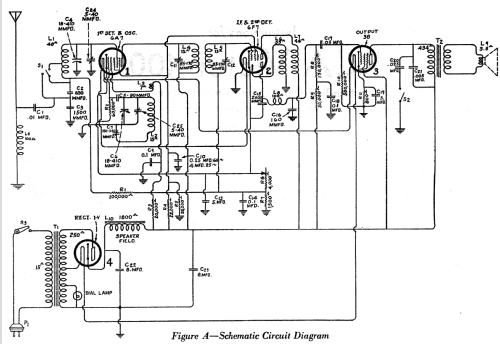
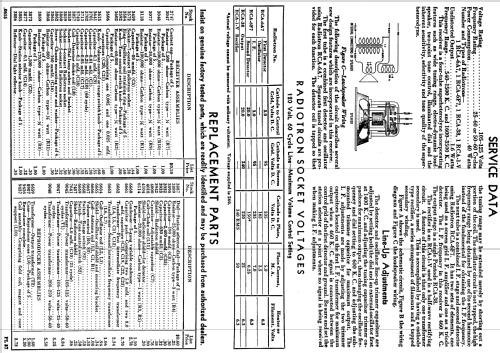

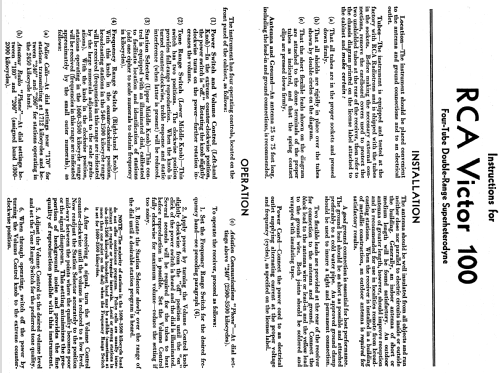
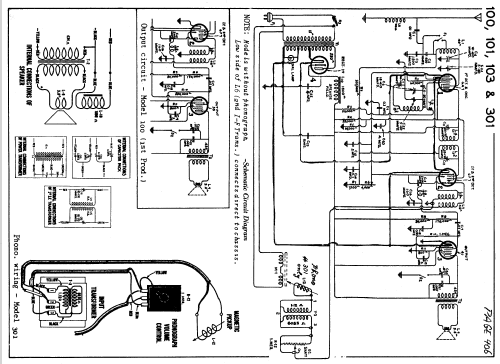

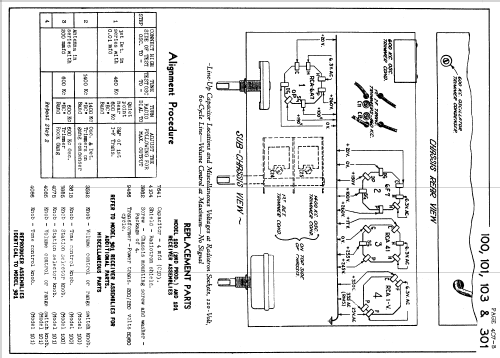
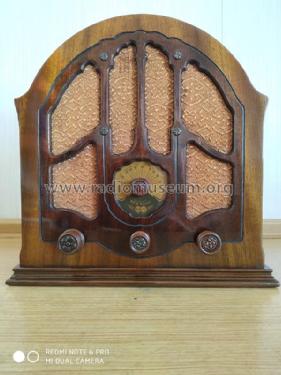
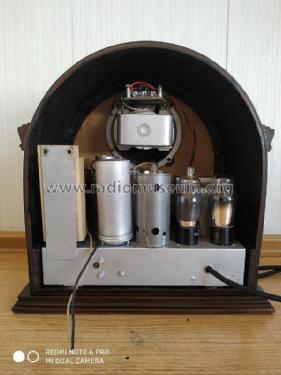
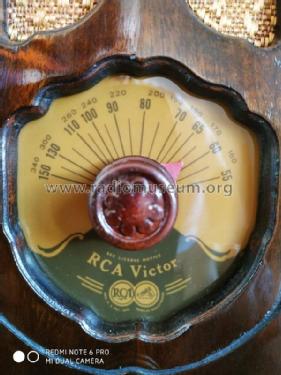

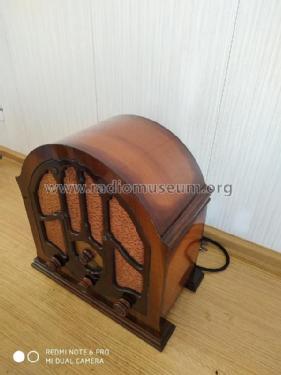
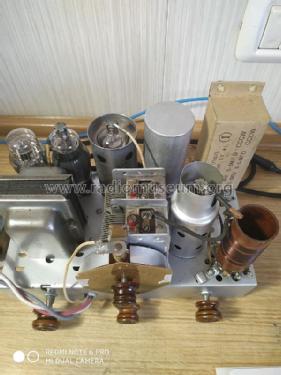
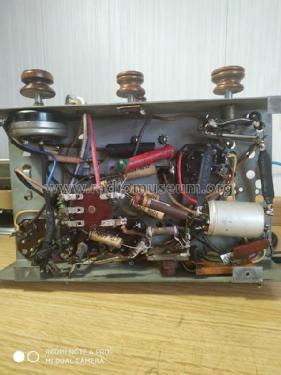
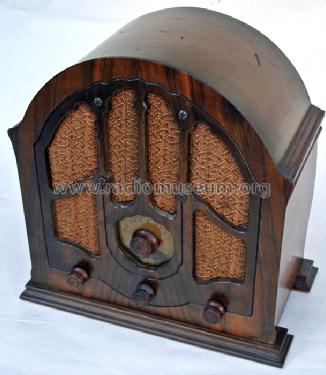
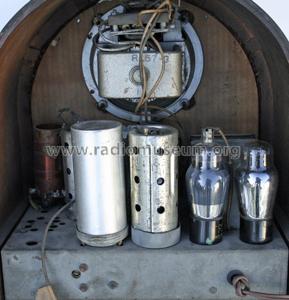
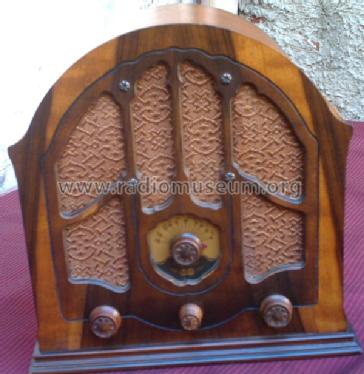

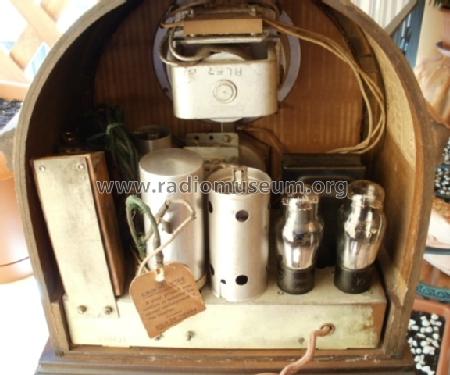
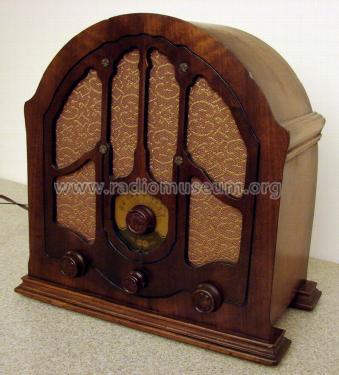
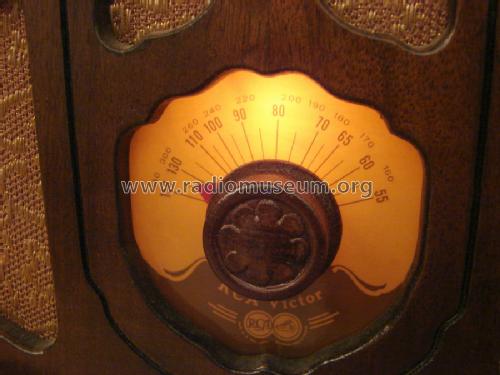
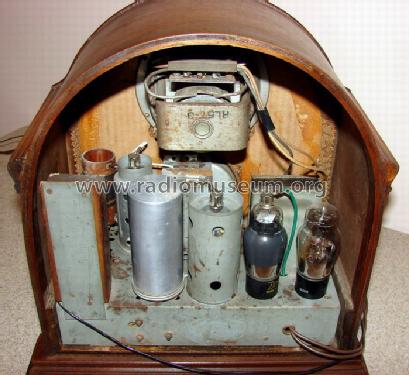

Click on the schematic thumbnail to request the schematic as a free document.
- Number of Tubes
- 4
- Main principle
- Superheterodyne (common); ZF/IF 460 kHz
- Tuned circuits
- 4 AM circuit(s)
- Wave bands
- Broadcast (MW) and Tropical/Marine/Police Band(s) = 150-200m.
- Power type and voltage
- Alternating Current supply (AC) / 105-125 Volt
- Loudspeaker
- Electro Magnetic Dynamic LS (moving-coil with field excitation coil) / Ø 12.5 cm = 4.9 inch
- Power out
- 1.6 W (unknown quality)
- Material
- Wooden case
- from Radiomuseum.org
- Model: 100 [early] - RCA RCA Victor Co. Inc.; New
- Shape
- Table-Cathedral-Type (upright, round top or gothic arch, not rounded edges only).
- Dimensions (WHD)
- 316 x 318 x 181 mm / 12.4 x 12.5 x 7.1 inch
- Notes
- later prod. used 41 instead of 38 tube.
- Net weight (2.2 lb = 1 kg)
- 6.9 kg / 15 lb 3.2 oz (15.198 lb)
- Price in first year of sale
- 22.95 USD
- External source of data
- National Geographic, November 1933 advertising.
- Source of data
- Collector's Guide to Antique Radios (6th edition)
- Circuit diagram reference
- Rider's Perpetual, Volume 4 = ca. 1934 and before
- Mentioned in
- Table Top Radios Vol. 1 Stein 98 (page 136.)
- Literature/Schematics (1)
- Service-Unterlage für Modelle 100, 101, 103 & 301
- Literature/Schematics (2)
- RCA Victor Service Notes "Red Book" Series
- Literature/Schematics (3)
- Cathedral & Tombstone Radios (page 217.)
- Author
- Model page created by Vitor Oliveira. See "Data change" for further contributors.
- Other Models
-
Here you find 5118 models, 3224 with images and 4152 with schematics for wireless sets etc. In French: TSF for Télégraphie sans fil.
All listed radios etc. from RCA (RCA Victor Co. Inc.); New York (NY)
Collections
The model 100 is part of the collections of the following members.