Matador V6A, V6A -06, V6A -20
Philips; Eindhoven (tubes international!); Miniwatt
- Country
- Netherlands
- Manufacturer / Brand
- Philips; Eindhoven (tubes international!); Miniwatt
- Year
- 1937/1938
- Category
- Broadcast Receiver - or past WW2 Tuner
- Radiomuseum.org ID
- 80979



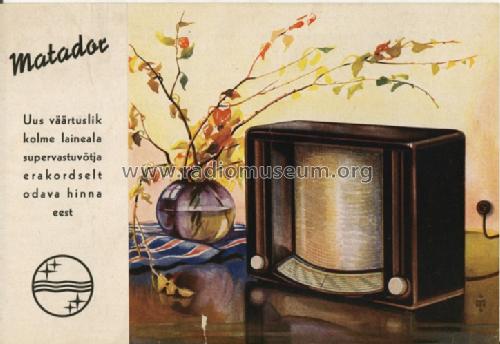
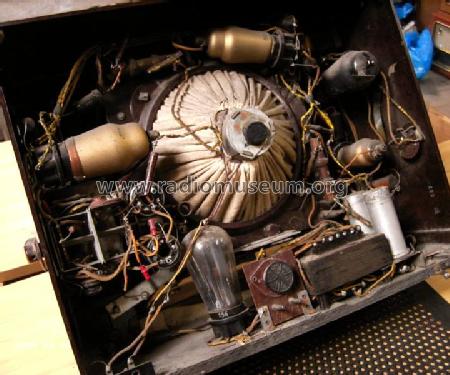
aus ebay, Verkäufer carsten26musik
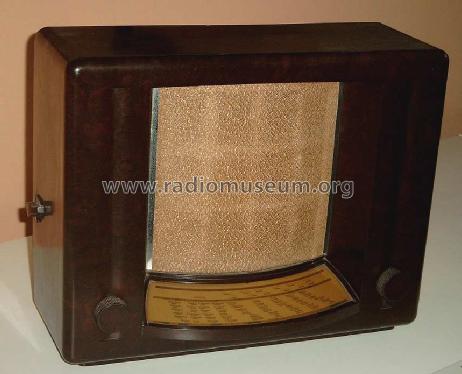
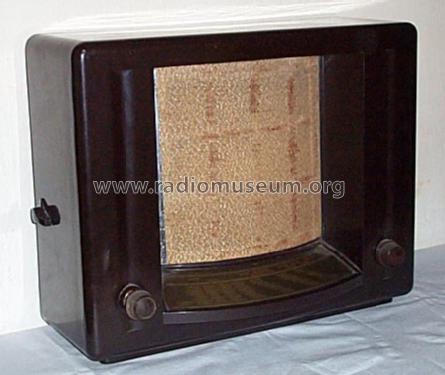

Foto selbst erstellt


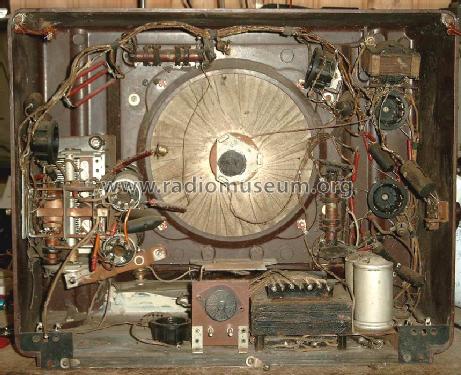

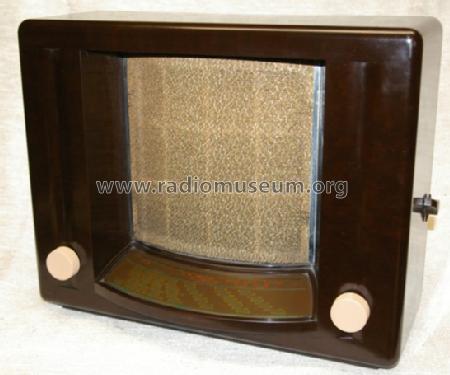


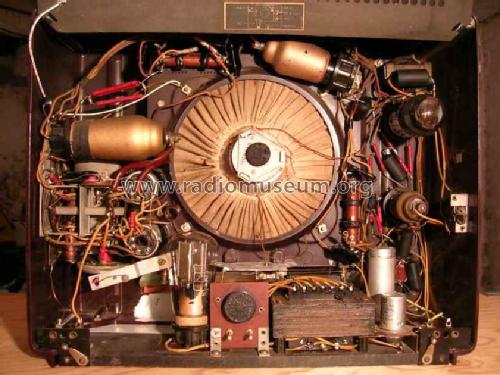
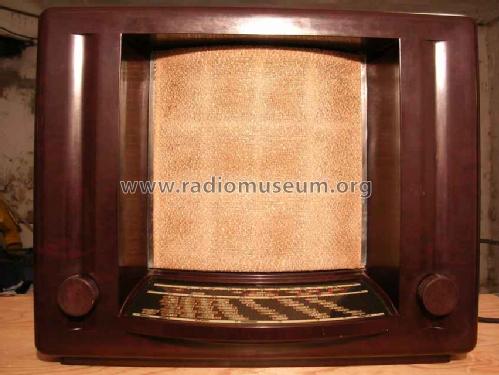
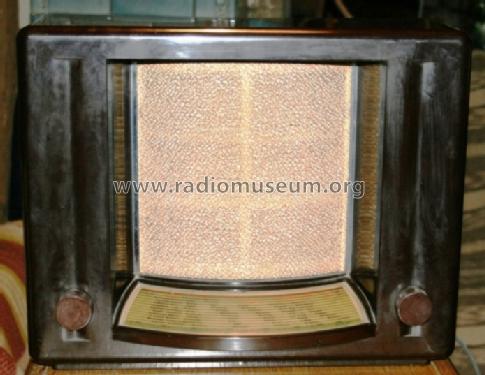
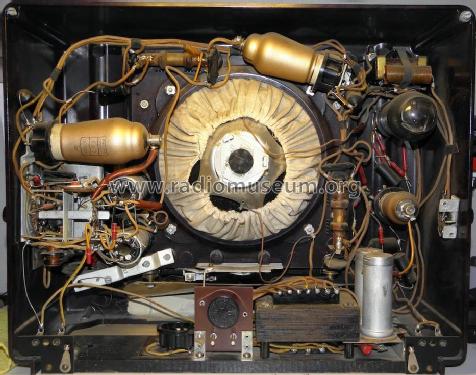

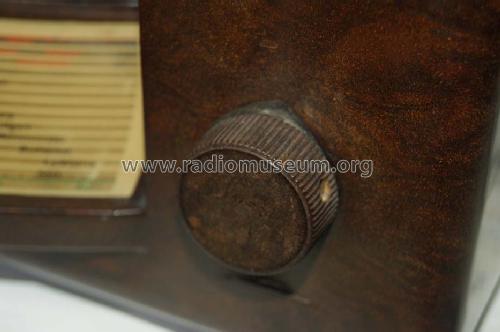
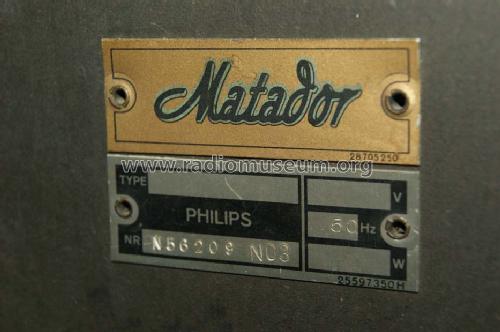
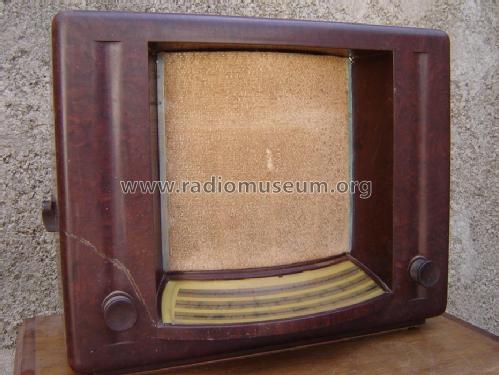
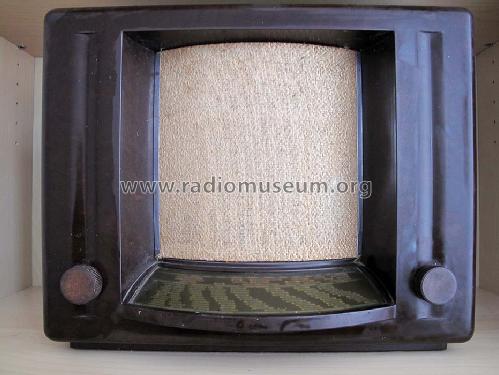
Front on shelf
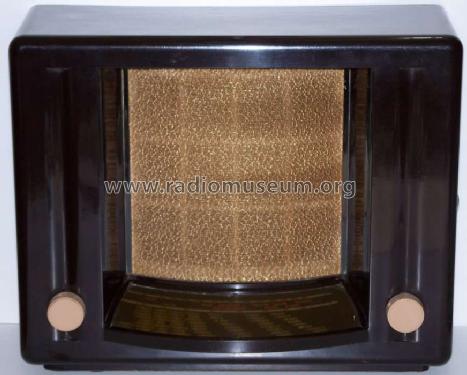
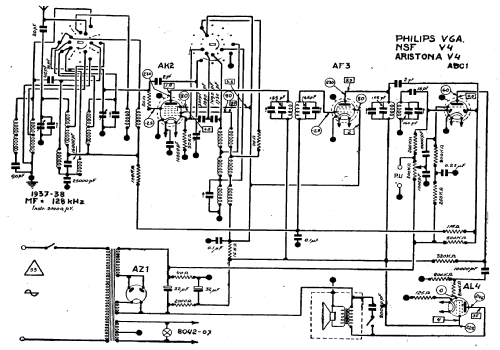
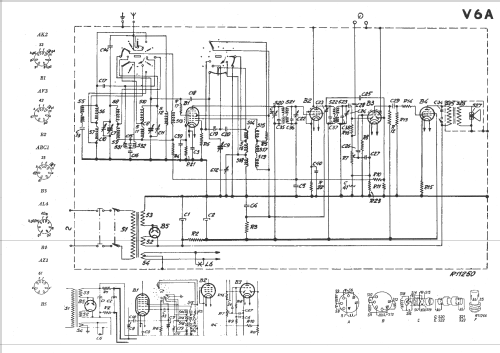
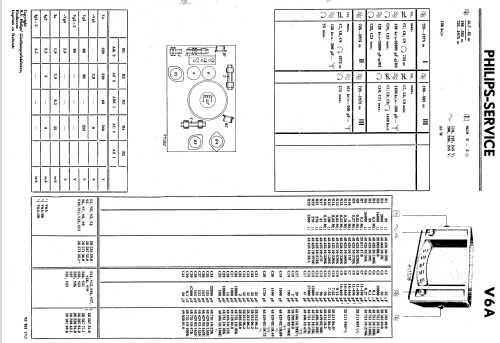
Click on the schematic thumbnail to request the schematic as a free document.
- Number of Tubes
- 5
- Main principle
- Superheterodyne (common); ZF/IF 128 kHz; 2 AF stage(s)
- Tuned circuits
- 7 AM circuit(s)
- Wave bands
- Broadcast, Long Wave and Short Wave.
- Power type and voltage
- Alternating Current supply (AC) / 110; 125; 145; 200; 220; 245 Volt
- Loudspeaker
- Permanent Magnet Dynamic (PDyn) Loudspeaker (moving coil) / Ø 20 cm = 7.9 inch
- Material
- Bakelite case
- from Radiomuseum.org
- Model: Matador V6A, V6A -06, V6A -20 - Philips; Eindhoven tubes
- Shape
- Tablemodel, low profile (big size).
- Notes
-
3 Band reception:
- LW: 725 - 1975 m.
- BC: 198 - 585 m.
- SW: 16,7 - 51 m.
Tuning scale light bulbs type: 8042 (4V, 500mA).Loudspeaker Philips type 9619. There are no connectors for a second loudspeaker or pick-up.The differences between V6A, V6A -06 and V6A -20 are minimal and described in the technical manual
- Literature/Schematics (1)
- -- Original-techn. papers.
- Author
- Model page created by a member from D. See "Data change" for further contributors.
- Other Models
-
Here you find 5273 models, 4419 with images and 3458 with schematics for wireless sets etc. In French: TSF for Télégraphie sans fil.
All listed radios etc. from Philips; Eindhoven (tubes international!); Miniwatt
Collections
The model Matador is part of the collections of the following members.
- Firmino Alves (P)
- Paweł Banach (PL)
- Vencislav Dochev (BG)
- Roberto Gabba (I)
- Lorenzo Govoni (I)
- Giuseppe Guerini (I)
- Sergey Kashekhlebov (RUS)
- Juhani Makivuoti † 21.09.13 (FIN)
- Francisco Martins (P)
- Marcos Matos (P)
- Jos Mulder (NL)
- Ignacio Rodriguez-Rodriguez (E)
- Hugo Sneyers (B)
- Torsten Stein (D)
- Urmas Tingas (EST)
- Francisc VISKY (RO)
- Dimitri Vorobiev (FIN)
- Dirson Willig (BR)
Literature
The model Matador is documented in the following literature.
Forum contributions about this model: Philips; Eindhoven: Matador V6A, V6A -06, V6A -20
Threads: 4 | Posts: 18
Dear friends, on several occasions I came across to one IF coil of this model interrupted.
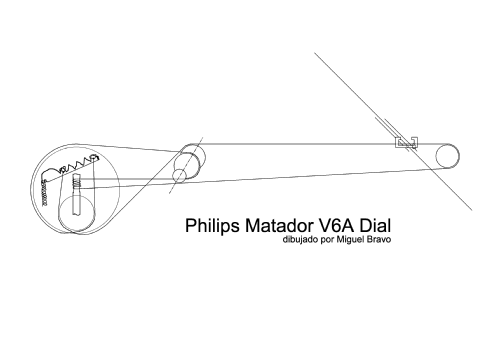
So I decided to go in to one of these parts and made a reverse engineering on it. The result is shown in attached picture.
I hope that helps with your "Matador" restoration
I think that will fit to the model variations too like Pioneiro V6, Junior V6, Junior V6A and Obertura V6.
Greetings
Meyer
Attachments
- Matador V6 IF coil specs (27 KB)
Meyer Rochwerger, 27.Feb.12
Gentlemen My Philips Matador V6A is now in an excellent working condition. There was more job than expected when I had to replace a lot of the cabeling since the rubber isolation had dried so badly that it fell off when touching. But the most important operation was to replace the tar condensers for the IF-filters and this resulted even to replace the tubular ceramic wirewounded capacitors with variable 6-40 pF ones. Since my signal generator (an old Heathkit ) do not go down the IF frequenxy (128 kHz) I had to use my home made function generator and the oscilloscope to ahcieve the peak IF. Oh boy, what a receiver to be 70 years old (I mentioned before it was 80 but the smart reader obviously noticed my miscalculation), its selectivity and sensitivity is excellent although the stability is not so good but it is not an object for everyday use either. Now there's only one thing left to do with the V6A, thats how to get the bakelite shiny and I think this is not the easiest job. Anyway, thanks a lot for your support and advices. The next project is waiting already on the table. Regards Lars-G.
Lars-G. Lundelin, 11.Feb.07
Dear Radio friends! When restoring my Philips 6VA I found that the power smoothing capacitors didn't come up to the rates according to the schematics. Well, when I unsoldered the dropping resistor (R2, 2k Ohm) it was damaged and I'd to renew it. This resistor is a quite big one (in fact 3 R:s in paralell)) and is probably wire wounded. Doe’s this wire wounded resistor make any sense to the +B rail when considering the inductive reactance, or does it act like a choke too? Regards Lars-G.
Lars-G. Lundelin, 03.Feb.07
Hello Radio friends! Trying to restore my newly acquired Philips Matador II V6A but I can't find out how to tune the IF-filters because the trimmer capacitors (as they suppose to be according to the schematics) do not have any facilities for that. Attaching a pic of the second IF-filter with caps arrowed. The caps are tubular ceramics and are wire wouded as can be seen from the picture. Any suggestions would be appreciated. Kind Regards Lars-G.
Lars-G. Lundelin, 23.Jan.07